 ultimate-guide
Why Choose Physician-Administered Aesthetic Injections
Table of Contents
- What Makes Physician-Administered Aesthetic Injections Different
- Why Provider Qualifications Matter for Safety and Results
- Finding a Qualified Botox Injector You Can Trust
- Essential Botox Consultation Questions to Ask
- Cosmetic Injection Safety: What You Need to Know
- Achieving Natural-Looking Botox and Filler Results
- Personalized Assessment and Treatment Planning
- Frequently Asked Questions
Last Updated: October 6, 2026
What Makes Physician-Administered Aesthetic Injections Different
Physician-administered aesthetic injections represent a fundamentally different approach to cosmetic care than what you might receive elsewhere. When a licensed physician personally administers your Botox, fillers, or other injectables, they bring medical training, accountability, and the ability to manage complications that non-physician injectors simply don't possess.
The difference isn't just credentials on a wall. A physician has completed medical school, residency, and ongoing continuing education in anatomy, pharmacology, and patient safety. They understand not just where to inject, but why, how facial structures interact, how aging affects the face differently across individuals, and how to recognize when something has gone wrong.
At Medical Aesthetics and Lasers, we've built our practice on this principle. Dr. Ayaz Khan, MD, personally administers every aesthetic injection, combining his medical expertise with an artistic eye for natural-looking results. This hands-on physician involvement changes what becomes possible in your treatment.
Why Provider Qualifications Matter for Safety and Results
The qualifications of whoever injects your face determine both your safety and your aesthetic outcome. This isn't a cosmetic preference, it's a medical reality grounded in anatomy, pharmacology, and risk management.
Medical Training and Facial Anatomy Knowledge
A physician has spent years studying human anatomy in depth. They understand the neurovascular structures beneath your skin, where blood vessels run, where nerves branch, which muscles control which movements. This knowledge prevents complications and enables precision.
When a qualified provider assesses your face, they're reading a three-dimensional map. They know that injecting too deep in one area can damage underlying structures, while injecting too shallow in another causes visible lumps. They understand how the aging face changes, not just that wrinkles appear, but how bone resorption, fat loss, and skin laxity interact to create the signs of aging you see.
Aesthetic anatomy is a specialized field. Many injectors receive training through weekend courses or manufacturer seminars. A physician's medical education includes years of gross anatomy, neuroanatomy, and clinical application, a fundamentally deeper foundation.
Ask any qualified injector about the superficial musculoaponeurotic system (SMAS) and how it relates to thread lift placement, or about the course of the buccal branch of the facial nerve. Their depth of answer will tell you whether they understand anatomy or have memorized injection points.
State-by-State Scope of Practice and Supervision Rules
The legal authority to administer injections varies significantly by state and by professional license. Understanding who is legally qualified to inject in your state matters for your protection.
Physicians (MD and DO) can administer aesthetic injections independently in all 50 states. Nurse practitioners and physician assistants can administer injections in most states, though some states require physician supervision or collaboration. Registered nurses can inject in many states when working under a physician's direction, though scope varies.
These regulations exist because injections carry real risks: vascular occlusion, nerve damage, infection, and allergic reactions. States that require physician involvement or supervision do so to ensure that someone with medical training is responsible for patient safety and complication management.
When you choose a physician-administered injection, you're choosing to work with someone whose license and legal authority depend on patient safety. A physician faces malpractice liability, licensing review, and regulatory oversight. This creates accountability that shapes how they practice.
Finding a Qualified Botox Injector You Can Trust
Choosing the right injector requires asking the right questions and understanding what qualifications actually mean. Not all providers are equal, and the difference shows in results and safety.
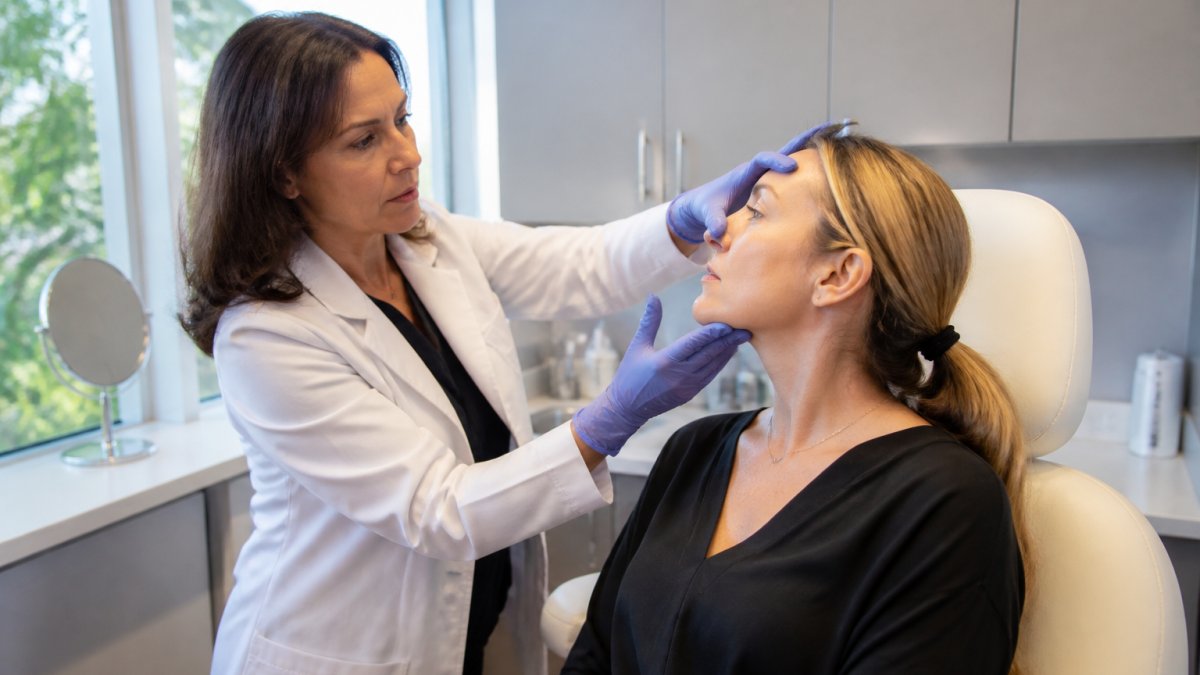
Start by confirming the injector's credentials.
Request before-and-after photos from actual patients with your face shape and skin type. A skilled injector's portfolio shows natural results, not frozen expressions or overdone lips.
Ask about their complication management. How do they handle bruising, swelling, asymmetry, or rare but serious complications like vascular occlusion?
Verify that the injector uses authentic products from reputable manufacturers. Counterfeit Botox and fillers exist and carry serious risks. Ask to see the product vial or packaging. Legitimate providers are transparent about this.
Schedule a consultation before committing to treatment.
Essential Botox Consultation Questions to Ask
Your consultation is your chance to assess whether this injector is right for you. These questions will reveal their knowledge, judgment, and approach.
Ask: "What's your approach to natural-looking results?" Listen for specifics. A qualified injector explains that they preserve facial movement, maintain facial expression, and respect the proportions of your face.
Ask: "What are the risks, and how do you manage them?" They should mention bruising, swelling, asymmetry, and rare but serious complications. They should explain preventive measures, technique choices, product selection, dosing, that reduce risk.
Ask: "How much product will I need, and why?" A responsible injector explains their dosing rationale based on your anatomy and goals. Pressure to buy more than necessary is a warning sign.
Ask: "What happens if I'm not happy with the result?" They should offer touch-ups or adjustments.
Ask about their experience. How many injections have they performed? How long have they been doing aesthetic medicine? What training have they pursued beyond their initial license?
Cosmetic Injection Safety: What You Need to Know
Safety in cosmetic injections depends on product authenticity, proper technique, appropriate dosing, and the injector's ability to recognize and manage complications. Understanding these factors helps you make an informed choice.
Botulinum toxin and dermal fillers are FDA-approved products with established safety profiles when administered correctly. Millions of treatments are performed safely each year. But safety depends entirely on the provider, their knowledge, technique, and judgment.
The most common complications are temporary: bruising, swelling, and mild asymmetry. These resolve within days to weeks and are expected parts of the healing process. More serious complications, vascular occlusion, nerve damage, infection, allergic reaction, are rare but possible. A qualified injector knows how to prevent them and how to respond if they occur.
Complication Prevention and Emergency Preparedness
Prevention starts with technique. A skilled injector uses proper needle placement, appropriate depth, and careful dosing. They understand the anatomy well enough to avoid critical structures. They inject slowly and with control, not rapidly or forcefully.
Medical history matters significantly. Certain medications, bleeding disorders, or recent procedures increase complication risk. A thorough consultation includes detailed medical history and screening for contraindications. This is why physician involvement is valuable, a physician can assess your full medical picture and adjust recommendations accordingly.
Product quality and storage are essential. Authentic products from reputable manufacturers have been tested for safety and efficacy. Counterfeit or improperly stored products carry unknown risks. A qualified provider uses only legitimate products and stores them correctly.
Emergency preparedness means having the knowledge and equipment to respond if complications occur. Vascular occlusion, where filler blocks a blood vessel, is rare but serious. A provider should know the signs (blanching, pain, tissue discoloration), know how to stop the procedure immediately, and know how to manage the emergency (hyaluronidase injection, warm compresses, possible emergency care).
Product Authenticity and Proper Storage
Counterfeit injectables are a growing problem. Fake Botox and fillers circulate in some markets, often at lower prices. These products may contain incorrect ingredients, harmful substances, or no active ingredient at all. They carry serious risks: infection, allergic reaction, tissue damage, or simply no effect.
Legitimate products come from manufacturers with rigorous quality control and established supply chains. Botox comes from Allergan, Xeomin from Revance, Jeuveau from Evolus. Fillers include brands like Juvéderm, Restylane, and Radiesse. A qualified provider purchases from authorized distributors and can verify product authenticity.
Storage matters. Botulinum toxin must be refrigerated at 2-8°C. Fillers have specific storage requirements depending on the product. Improper storage degrades the product, reducing efficacy and potentially creating safety risks. Ask your provider about their storage protocols.
A qualified provider is transparent about product sourcing. They can show you the vial or box, explain where they purchased it, and discuss the specific product they're using for your treatment. If they're evasive or dismissive about product authenticity, that's a serious concern.
Achieving Natural-Looking Botox and Filler Results
Natural-looking results require skill, restraint, and understanding of facial aesthetics. The goal is to address the signs of aging while preserving your appearance and expression.
The difference between natural and overdone often comes down to dosing and placement. A conservative approach, using less product rather than more, preserves facial movement and expression.
Facial balance matters. Your face has proportions and symmetries that contribute to its character. A qualified injector respects these proportions rather than imposing a template. Two people with similar wrinkles may need very different treatments because their faces are different.
Individual variation in response to Botox is real. Some people see results within 3 days; others take 10-14 days. Some need less product; others need more. A skilled injector accounts for this.
Filler placement requires three-dimensional thinking. A qualified injector considers how filler will look from different angles and how it will move with your facial expressions. They understand that adding volume in one area affects how the whole face looks.
Personalized Assessment and Treatment Planning
Effective treatment starts with understanding your unique face and your specific goals. A personalized approach means the injector takes time to assess you, listens to what matters to you, and explains how they'll address your concerns.
A thorough assessment includes evaluating your facial structure, skin quality, degree of volume loss or muscle activity, and how these contribute to the signs of aging you see.
According to the American Academy of Aesthetic Medicine, personalized treatment planning is a cornerstone of safe and effective aesthetic medicine. A one-size-fits-all approach doesn't account for individual anatomy, goals, or preferences.
A qualified injector explains their treatment plan clearly. They explain which products they recommend and why. They explain the expected timeline for results. They discuss maintenance, how often you'll need touch-ups and why.
This is where physician involvement adds value. A physician brings diagnostic skill and medical judgment.
Choosing physician-administered aesthetic injections means prioritizing safety, expertise, and personalized care. Schedule a consultation with Medical Aesthetics and Lasers to discuss your goals and discover how physician-administered injections can help you achieve natural-looking results that enhance your confidence.
Frequently Asked Questions
What is the difference between physician-administered aesthetic injections and injections from other providers?
Physicians have completed medical school and extensive training in facial anatomy, physiology, and complications management. They can assess your medical history, identify contraindications, and respond to rare adverse reactions. Physician-administered injections also allow for customized dosing and placement based on your unique facial structure and goals. A qualified physician understands how injectable treatments interact with other medications and conditions, reducing risk.
What questions should I ask a qualified Botox injector during my consultation?
Ask about the injector's training and years of experience with injectables. Request to see before-and-after photos of their work. Ask how they personalize treatment to your face shape and goals. Inquire about their approach to natural-looking results versus frozen appearance. Ask what complications they have encountered and how they handle them. Finally, confirm they use only authentic, properly stored products from licensed manufacturers.
How do physicians ensure natural-looking Botox and filler results?
Physicians use detailed facial anatomy knowledge to inject at precise depths and angles, preserving natural facial expression and movement. They understand how different products work and select appropriate options for your specific concerns. Personalized dosing prevents over-treatment. A physician also considers your age, skin type, and aesthetic goals during the consultation, then adjusts the treatment plan accordingly. Follow-up appointments allow them to refine results and maintain a natural appearance over time.
What cosmetic injection safety measures should a physician-led practice follow?
A qualified practice maintains strict infection control, uses sterile techniques, and stores products in controlled conditions to prevent contamination or degradation. Physicians verify product authenticity and source from licensed distributors. They screen patients for contraindications and maintain detailed medical records. Emergency medications and equipment should be available on-site. Physicians document informed consent, discuss realistic outcomes and side effects, and provide clear aftercare instructions. They also schedule follow-up appointments to monitor results and address any concerns.