 ultimate-guide
Natural Looking Aesthetic Results 2026: What's Changing
Table of Contents
- Why Natural Looking Aesthetic Results Are Redefining 2026
- Facial Optimization vs. Transformation: The New Standard
- Regenerative Aesthetic Treatments and Collagen Banking
- Minimally Invasive Cosmetic Procedures: Strategic Filler Placement and Device Stacking
- Physician-Led Aesthetic Care: Why It Matters for Subtle Outcomes
- The Psychological Shift: Managing Expectations for Undetectable Results
- Maintenance and Long-Term Outcomes: Protecting Your Natural Results
- Conclusion
- Frequently Asked Questions
Last Updated: October 1, 2026
Why Natural Looking Aesthetic Results Are Redefining 2026
Natural looking aesthetic results 2026 means patients walk out looking like a well-rested version of themselves, not a different person. That shift is reshaping how physicians plan treatment. At Medical Aesthetics and Lasers, the focus has moved from volume to proportion: fewer syringes, smarter placement, and a plan built around each patient's unique anatomy.
The old goal was dramatic change. The new goal is facial optimization, where subtle enhancements preserve expression and movement.
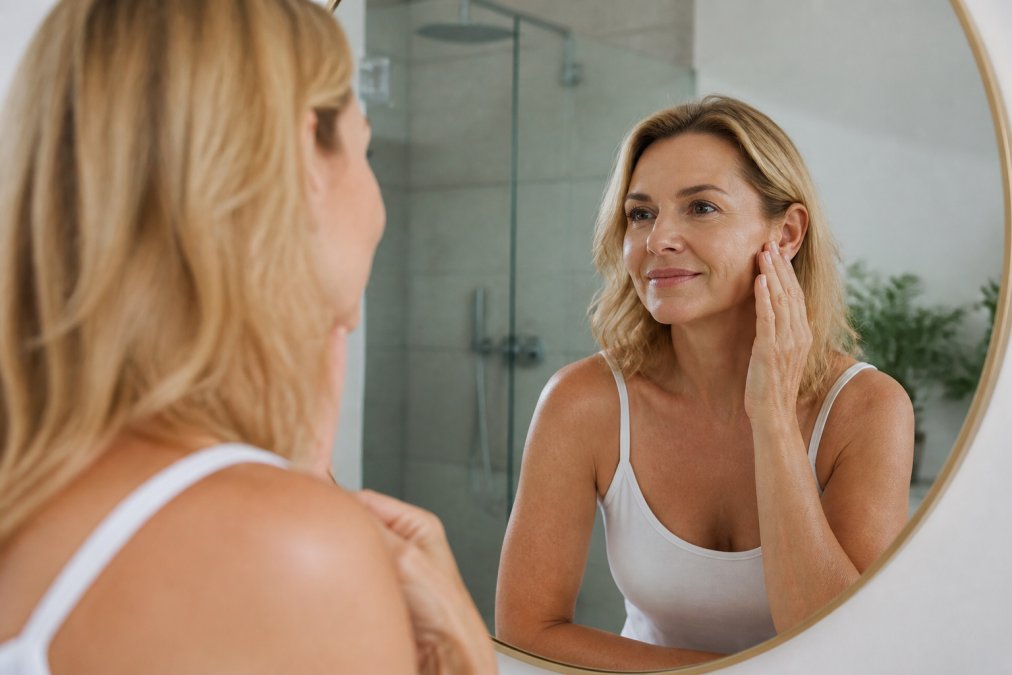
Why the change? Patients saw too many overfilled faces and decided they wanted no part of it. Injectors responded by treating structure first and volume second. The American Society of Plastic Surgeons has tracked rising interest in minimally invasive procedures, and the pattern holds: people want improvement they can control, not a new face.
Three forces drive this:
- Injectable minimalism replaced "more is better" as the default philosophy
- Regenerative and collagen-stimulating treatments entered mainstream planning
- Patients now ask for gradual improvement across months, not a single dramatic session
That last point matters most. Gradual change reads as natural because nobody, including the patient, can point to the day it happened.
Facial Optimization vs. Transformation: The New Standard
Facial optimization is the practice of enhancing individual features so the whole face stays in balance, rather than chasing one ideal look. Transformation changes who you appear to be. Optimization changes how rested and healthy you appear.
The distinction is practical, not philosophical. A physician planning optimization starts with proportion: chin projection, cheek support, jawline definition, and how each feature relates to the others. Filler goes where it restores structural support, not where it adds the most volume.
A common mistake is treating each concern in isolation. Filling nasolabial folds without addressing midface support usually produces a heavier look, not a younger one.
This is also where strategic filler placement separates skilled injectors from rushed ones. The goal is natural looking aesthetic results 2026, and harmony is about ratios, not quantities.
Regenerative Aesthetic Treatments and Collagen Banking
Regenerative aesthetics is a category of treatments that stimulate the body's own collagen and tissue repair instead of only adding volume. Collagen banking is the preventive version: building collagen reserves earlier so skin ages from a stronger baseline.
The mechanism matters, because it explains why these results look natural. Biostimulators such as Sculptra (poly-L-lactic acid) and Radiesse (calcium hydroxylapatite) are injected as a gel or microsphere suspension, then gradually broken down while triggering a localized fibroblast response. New collagen is laid down over roughly 8 to 12 weeks per session, and the effect compounds across a series. PRP and PRF work differently, they deliver concentrated growth factors from your own blood to support tissue repair rather than adding a scaffold. Exosome-based options are newer and less standardized, so protocols vary widely between practices.
That slow build is exactly why nothing looks "done." There is no single day a friend can point to. Compare that to hyaluronic acid filler, which is visible immediately and typically lasts 6 to 18 months depending on the product and the area.
Regenerative vs. Traditional Filler: A Cost-Benefit Frame
This is the comparison most articles skip, and it is the one patients actually need. Rather than quoting prices that vary by market and injector, think in terms of cost per year of result and what you are buying.
| Dimension | Traditional HA Filler | Regenerative / Biostimulator |
|---|---|---|
| Onset | Immediate | Gradual, 8-12 weeks per session |
| Typical duration | 6-18 months | Often 1-2+ years after a completed series |
| What it adds | Volume and contour | Collagen and tissue quality |
| Reversibility | Reversible with hyaluronidase | Not reversible |
| Maintenance pattern | Repeat injections as product dissolves | Series, then periodic touch-ups |
| Best for | Structural support, defined areas | Overall skin quality, diffuse aging |
A common pattern is that patients in their 40s and 50s get the most from combining both: a small amount of structural filler for support, plus a biostimulator series to improve tissue quality underneath. Over a 24-month horizon, that combination often requires less total filler than a filler-only plan, because the underlying tissue is holding up better.
The trade-offs are real, though. Regenerative treatments are not reversible, results are slower, and a poorly placed biostimulator is far harder to correct than a hyaluronic acid product. That is a strong argument for physician-led planning rather than shopping by price.
Collagen banking is the preventive layer on top of all this. Starting a collagen-stimulating plan in your 30s or early 40s, before significant volume loss, tends to produce a more convincing long-term outcome than waiting until the face has already changed and trying to rebuild it.
Minimally Invasive Cosmetic Procedures: Strategic Filler Placement and Device Stacking
Minimally invasive cosmetic procedures in 2026 lean on two techniques: strategic filler placement and device stacking. Both exist to get more result from less intervention.
Strategic filler placement means using small amounts in high-impact areas: cheek support, chin projection, jawline, and temple hollows.
| Approach | What It Targets | Typical Role in a Plan |
|---|---|---|
| Strategic filler | Structural support, contour | Foundation, small volumes |
| Biostimulators | Collagen and tissue quality | Gradual improvement over months |
| Microneedling with RF | Skin texture, tightening | Surface and mid-layer support |
| Ultrasound or laser | Firmness, tone | Non-surgical rejuvenation |
Physician-Led Aesthetic Care: Why It Matters for Subtle Outcomes
Physician-led aesthetic care means a doctor with full medical training evaluates your anatomy, history, and goals before anything is injected. Subtle results demand that level of judgment, because the margin between "refreshed" and "obviously done" is small.
The Psychological Shift: Managing Expectations for Undetectable Results
Undetectable results create a psychological challenge that gets less attention than it deserves: if nobody can tell, patients sometimes wonder whether anything changed. Managing that expectation is part of good care.
A few expectations worth setting before treatment:
- Improvement is gradual, especially with collagen-stimulating treatments
- Final results may take weeks or months to appear
- Your face will still move, and that is intentional
- Touch-ups are normal and expected, not a sign of failure
Maintenance and Long-Term Outcomes: Protecting Your Natural Results
Long-term outcomes depend less on any single treatment and more on the maintenance plan behind it. Natural results fade gradually, and a good plan keeps them from ever swinging too far in either direction.
A Realistic 12-24 Month Maintenance Cadence
Neuromodulators (Botox, Xeomin, Jeuveau, Dysport). Neuromodulators (Botox, Xeomin, Jeuveau, Dysport) typically require repeat treatments to maintain results.
Milestones Worth Tracking
- Month 3: Early collagen response from biostimulators; skin quality often starts to shift before volume does.
- Month 6: Structural filler is at peak effect; this is the right time to judge whether proportions are balanced.
- Month 12: First real decision point, touch-up, hold, or adjust the plan.
- Month 18-24: Reassess the overall strategy. If the plan has been working, this is where patients often need less, not more.
Risk Mitigation Over the Long Term
Risk mitigation is not just about avoiding bad outcomes on treatment day. It is about catching small changes early. Regular follow-up appointments can help manage long-term results.
A few specific safeguards:
- Keeping a record of treatments and communicating openly with your provider are important for long-term care.
Conclusion
The hardest part of modern aesthetics is restraint. It is easy to add more; it is far harder to know when to stop, and that judgment is what separates a refreshed face from an overdone one. Medical Aesthetics and Lasers builds every plan around physician-led evaluation, personalized treatment sequencing, and collagen-supporting options like Sculptra, Radiesse, PRP, and exosome-based therapies. If you want results that look like you on a good day, not like a procedure, book a consultation and get a plan built for your anatomy.
Frequently Asked Questions
What aesthetic trends are defining natural beauty in 2026?
Natural looking aesthetic results in 2026 center on facial optimization rather than transformation. Key trends include strategic filler placement to restore structural support, regenerative aesthetic treatments like biostimulators that build collagen gradually, and device stacking to improve skin quality. Injectable minimalism is replacing overfilling, with practitioners focusing on balanced results that respect unique anatomy and preserve natural facial expressions.
How do regenerative treatments contribute to natural-looking results?
Regenerative aesthetic treatments such as PRP, PRF, exosomes and biostimulators work by supporting tissue rejuvenation rather than adding volume. Collagen banking uses collagen-stimulating treatments to improve skin quality and structural support over time, producing gradual improvement that looks natural. Because these approaches work with your body's own biology, results tend to emerge over weeks and months rather than appearing overnight.
Why is physician-led care essential for subtle cosmetic outcomes?
Physician-led aesthetic care brings medical training in facial anatomy, risk assessment and injection technique that directly affects natural looking results. A physician can evaluate your unique anatomy, identify underlying health conditions, and design combination plans that avoid overfilling. Physician-administered injectables also allow for proper dosing and placement, which reduces the risk of a frozen or distorted appearance.
How long do natural looking results from minimally invasive procedures last?
Longevity depends on the treatment. The duration of neuromodulator and dermal filler results varies. Regenerative options like PRP or biostimulators produce gradual improvement that may continue for months after treatment. Post-procedure maintenance, including skin care, sun protection and periodic touch-ups, helps preserve outcomes. A physician can map a personalized schedule during consultation.