 ultimate-guide
Non-Surgical Body Contouring Results: What to Expect
Table of Contents
- What Non-Surgical Body Contouring Actually Delivers
- How Non-Surgical Body Contouring Works
- Timeline: When You'll See Non-Surgical Body Contouring Results
- How Many Body Contouring Sessions Are Needed
- Non-Surgical Fat Reduction Recovery Time and Downtime
- Maintaining Body Contouring Results Long-Term
- Is Non-Surgical Body Contouring Right for You
- Conclusion
- Frequently Asked Questions
Last Updated: September 28, 2026
What Non-Surgical Body Contouring Actually Delivers
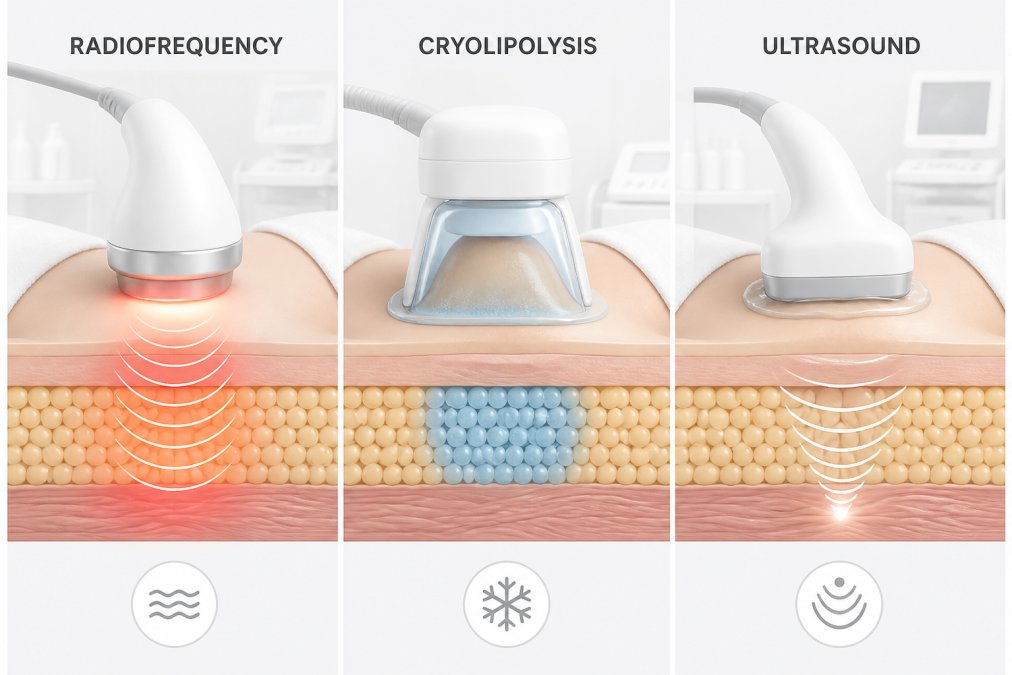
Non-surgical body contouring results are achievable but differ fundamentally from surgery. This approach uses radiofrequency energy, ultrasound, or cryolipolysis to reduce stubborn fat and tighten skin without incisions, anesthesia, or extended recovery, delivering gradual improvement over weeks to months, not overnight transformation.
Most people see noticeable changes after 4-6 weeks, with continued improvement through 12 weeks. Results depend on technology, treatment area, baseline skin condition, and post-procedure care. A single session produces subtle effects; multiple sessions compound the results.
The appeal: no surgical downtime, anesthesia, or scarring. You return to normal activities immediately. The tradeoff is patience, the body's natural metabolic process takes time to eliminate fat cells and rebuild collagen.
How Non-Surgical Body Contouring Works
Non-surgical body contouring relies on three primary technologies with distinct mechanisms and efficacy profiles. Understanding how they differ helps set realistic expectations.
Cryolipolysis (Fat Freezing)
Cryolipolysis uses controlled cooling to target subcutaneous fat without damaging overlying skin. The handheld applicator cools the treatment area to approximately 39°F, inducing apoptosis in fat cells. The frozen fat cells crystallize, triggering an inflammatory response that your body's immune system processes over 8-12 weeks as the lymphatic system eliminates the debris.
Cryolipolysis is most effective for localized, pinchable fat on the abdomen, flanks, thighs, and chin. Most patients need two treatments per area to see dramatic improvement. The procedure takes 35-60 minutes. Temporary numbness lasting days to weeks is common. This technology excels at fat reduction but provides minimal skin tightening.
Radiofrequency (RF) Energy
Radiofrequency devices emit electromagnetic waves that penetrate skin and subcutaneous tissue, generating heat. This triggers immediate collagen contraction and stimulates collagen remodeling over weeks, while inducing fat cell apoptosis through thermal injury.
RF treatments feel warm to hot but not painful, with controlled heat reaching 104-122°F in the subcutaneous layer. Sessions last 20-40 minutes. Because RF stimulates collagen production alongside fat reduction, it is particularly valuable for patients with mild to moderate skin laxity. Most practitioners recommend 4-6 treatments spaced 2-4 weeks apart for optimal collagen remodeling.
Radiofrequency works on all skin types and is especially effective where skin tightening matters as much as fat reduction. Downtime is minimal; mild redness resolves within hours.
Ultrasound-Based Systems (Focused Ultrasound)
Focused ultrasound creates acoustic waves that penetrate to a precise depth, disrupting fat cell membranes through mechanical stress and heat. Unlike RF, ultrasound targets a specific layer, minimizing damage to overlying skin.
Ultrasound treatments require 30-60 minutes per session and feel like deep pressure or mild vibration. Most patients need 1-3 sessions to see meaningful results, making ultrasound efficient for time-conscious patients. Like cryolipolysis, it provides strong fat reduction but limited skin tightening.
Comparative Framework
| Technology | Primary Benefit | Best For | Sessions Needed | Timeline to Results | Skin Tightening |
|---|---|---|---|---|---|
| Cryolipolysis | Targeted fat reduction | Pinchable fat deposits, abdomen, flanks, chin | 2-3 per area | 8-12 weeks | Minimal |
| Radiofrequency | Fat reduction + skin tightening | Loose skin + fat, all body areas | 4-6 | 8-12 weeks | Significant |
| Ultrasound | Efficient fat reduction | Localized deposits, time-limited patients | 1-3 | 6-10 weeks | Minimal |
How Results Compound
All three technologies rely on your body's natural healing response. One session creates 10-20% fat reduction. A second session, spaced 4-6 weeks later, adds cumulative effect. By session three or four, compounding results become visibly apparent to others.
Spacing matters: treatments too close together prevent your body from completing the elimination cycle, while spacing them too far apart loses cumulative momentum.
Timeline: When You'll See Non-Surgical Body Contouring Results
Most patients notice subtle changes at 3-4 weeks post-treatment. By 6-8 weeks, changes become apparent to others. Peak results typically appear 8-12 weeks after the final session as collagen remodeling completes.
After one treatment, improvement is modest. After two treatments spaced 4-6 weeks apart, the cumulative effect becomes visible. Three to four sessions deliver the most dramatic results for most patients.
Timeline variation depends on your starting point, skin elasticity, age, and how your body responds to collagen stimulation.
How Many Body Contouring Sessions Are Needed
Most patients require 2-4 sessions to achieve their aesthetic goals. Understanding the cost-benefit curve helps you plan realistically.
The Diminishing Returns Framework
Results follow a predictable pattern: Session 1 produces 10-20% fat reduction and mild skin tightening. Session 2 reaches 20-35% fat reduction with visible results to others. Session 3 delivers 35-50% fat reduction and pronounced skin tightening, the point of diminishing returns for most patients. Session 4+ provides subtle refinement only.
Factors Determining Your Optimal Session Count
Treatment area size and fat volume: Larger areas may need 3-4 sessions; smaller zones often achieve results with 2-3 sessions.
Baseline skin elasticity: Loose skin benefits from extra sessions to maximize collagen production, particularly with radiofrequency. Firm skin may achieve goals with fewer sessions.
Your aesthetic goals: Subtle refinement often needs 2 sessions; dramatic fat reduction may require 3-4 sessions total.
Technology selected: Radiofrequency requires 4-6 sessions for optimal collagen remodeling; cryolipolysis and ultrasound achieve comparable fat reduction in 2-3 sessions but provide less skin tightening.
Your weight stability: Active weight loss compounds results faster; stable weight means results depend entirely on the treatment.
Financial Planning: Cost Per Session and Total Investment
Most practices charge per session rather than per area. Treating multiple areas in one session typically costs more than a single-area session but less than two separate appointments.
A realistic financial framework: Single-session investment delivers modest results. Two-session packages deliver visible improvement, the "sweet spot" for most patients. Three-session packages provide dramatic results. Four-plus sessions show diminishing returns.
Many practices offer package pricing for 3 or 4 sessions booked upfront, which reduces per-session cost compared to paying per treatment. This incentivizes committing to a full course but locks you into a financial obligation.
Spacing and Timeline Considerations
Sessions must be spaced 4-6 weeks apart to allow your body to complete the fat cell elimination and collagen remodeling cycle. Spacing them further apart extends your overall timeline.
If you are treating multiple areas, you can stagger sessions strategically. For example, treat your abdomen in week 1, flanks in week 5, and thighs in week 9. This spreads cost across months while maintaining momentum.
The Maintenance Question
After completing your initial course, most patients maintain results for 1-2 years with stable weight.
| Session Count | Expected Fat Reduction | Skin Tightening | Best For | Cost-Benefit Profile |
|---|---|---|---|---|
| 1 session | 10-20% | Minimal | Trial/confirmation | Low ROI; results modest |
| 2 sessions | 20-35% | Mild to moderate | Most patients' satisfaction point | High ROI; visible improvement |
| 3 sessions | 35-50% | Moderate to significant | Dramatic transformation goals | Good ROI; diminishing returns begin |
| 4+ sessions | 50%+ | Significant | Maximum fat reduction, large areas | Lower ROI; refinement only |
Non-Surgical Fat Reduction Recovery Time and Downtime
Non-surgical body contouring shines compared to surgical alternatives. Most patients experience zero downtime and can return to work, exercise, and normal activities immediately.
Maintaining Body Contouring Results Long-Term
Non-surgical body contouring results are durable but not permanent. Treated fat cells are gone and do not regenerate, but remaining fat cells can expand if you gain weight. Maintaining results requires sustained attention to diet and lifestyle.
Is Non-Surgical Body Contouring Right for You
Ideal candidates are adults with localized fat deposits resistant to diet and exercise, realistic expectations about gradual results, and good skin elasticity.
Conclusion
Non-surgical body contouring results are real, achievable, and increasingly popular because they deliver visible improvement without surgery's risks and downtime. The timeline requires patience, expect gradual changes over 8-12 weeks, with best outcomes after 2-4 treatment sessions. The key to success is understanding that results compound over time and that maintaining your weight preserves the benefits long-term.
Frequently Asked Questions
How long does it take to see results from non-surgical body contouring?
Most patients notice gradual improvement within 2 to 4 weeks, with more visible transformation appearing between 8 and 12 weeks as the body processes fat cell reduction through its natural metabolic process. Results continue to improve over 3 to 6 months as collagen production increases and adipose tissue continues to shrink. The timeline depends on the technology used, treatment intensity, and individual metabolism.
How many sessions are typically required for visible body contouring results?
The number of sessions required depends on your aesthetic goals, the size of the treatment area, the technology used, and how your body responds to fat cell apoptosis. Your physician will create a personalized treatment plan during your consultation.
Are the results of non-surgical body contouring permanent?
Results are long-lasting but not permanent. Once fat cells are eliminated through cryolipolysis or radiofrequency energy, they do not return to that area. However, remaining fat cells can expand if you gain weight, and new fat can accumulate. Maintaining a stable weight and healthy lifestyle significantly extends your results. Most patients enjoy visible improvements for 2 years or longer with proper post-procedure care.
What is the difference between surgical and non-surgical body contouring results?
Surgical procedures deliver faster, more dramatic results in a single session but involve anesthesia, incisions, and longer recovery periods. Non-surgical body contouring produces gradual, natural-looking improvements with minimal downtime and no incisions. Results develop over weeks and months rather than immediately, but the gradual process often feels more natural and allows you to adjust your aesthetic goals as you see progress.