 ultimate-guide
PRP for Osteoarthritis: Benefits & What to Expect
Table of Contents
- What Is Platelet-Rich Plasma and How It Works for Osteoarthritis
- How PRP Injections Address Joint Damage and Pain
- PRP Injection Recovery Time: What to Expect After Treatment
- Who Is a Good Candidate for PRP Therapy
- PRP vs. Hyaluronic Acid Injections: Which Is Right for You
- Is PRP Covered by Insurance
- Real Results: Clinical Evidence and Patient Outcomes
- Conclusion
- Frequently Asked Questions
Last Updated: September 19, 2026
What Is Platelet-Rich Plasma and How It Works for Osteoarthritis
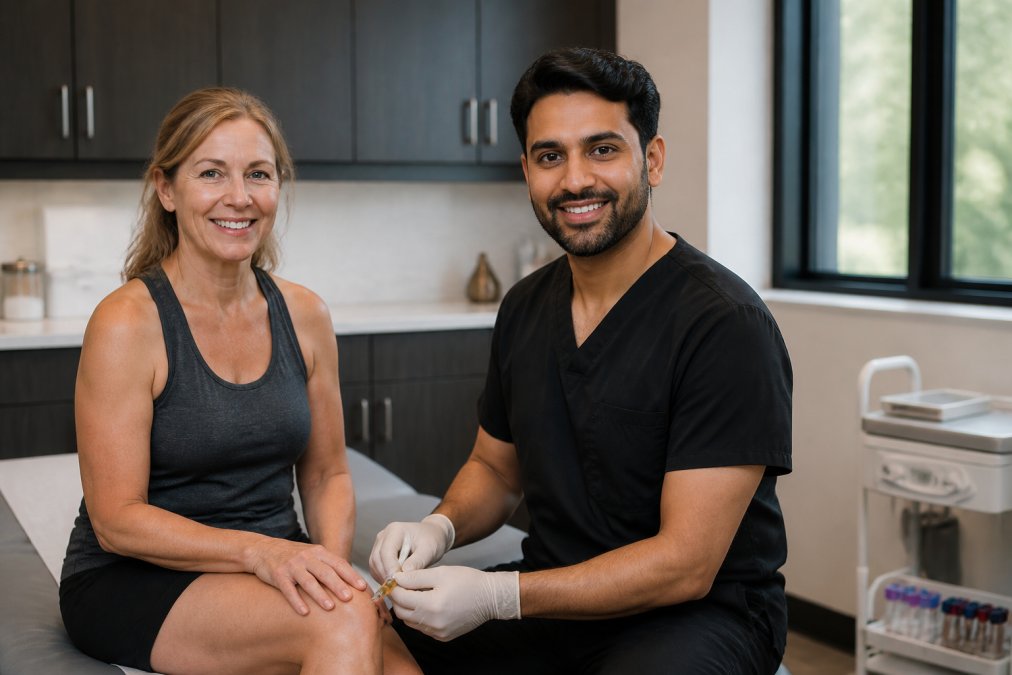
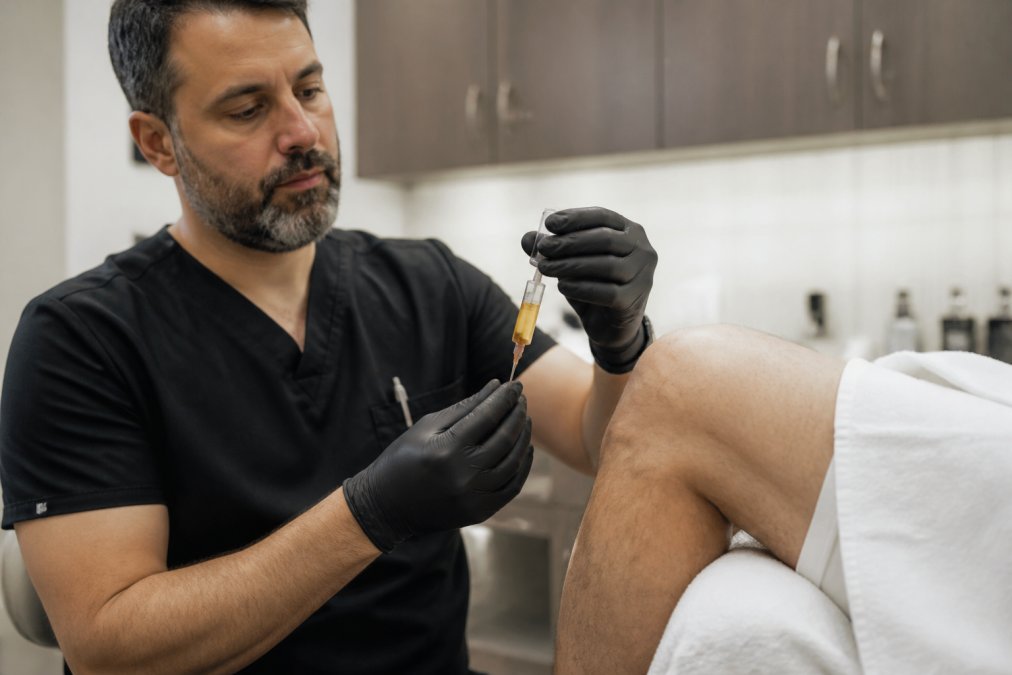
PRP osteoarthritis treatment uses platelet-rich plasma, an autologous blood-derived orthobiologic agent created by concentrating platelets from your own blood to deliver growth factors directly into damaged joint tissue. When you receive a PRP injection for osteoarthritis, your clinician draws a small blood sample, processes it through centrifugation to isolate the platelet-rich fraction, and then injects the concentrated solution directly into the affected joint. The growth factors contained in platelets, including vascular endothelial growth factor (VEGF), transforming growth factor-beta (TGF-β), and platelet-derived growth factor (PDGF), work to modulate pain signals and promote tissue regeneration in the joint environment.
Unlike corticosteroid injections that reduce inflammation temporarily, PRP addresses underlying cartilage degradation by restoring growth factors depleted in osteoarthritic joints.
At Medical Aesthetics and Lasers, we offer PRP as part of our regenerative medicine approach for patients with musculoskeletal concerns including osteoarthritis, leveraging your body's own healing capacity for non-surgical intervention.
How PRP Injections Address Joint Damage and Pain
PRP injections trigger anti-inflammatory responses that reduce cartilage-degrading enzymes while stimulating fibroblast activity and new matrix synthesis, potentially slowing cartilage loss.
PRP works best in mild to moderate osteoarthritis when the joint retains sufficient structural integrity to respond to growth factor signaling. Advanced disease with severe cartilage loss limits regenerative capacity.
Unlike corticosteroid injections that provide relief within days, PRP typically requires 4-12 weeks for functional improvement as the healing cascade unfolds gradually.
PRP Injection Recovery Time: What to Expect After Treatment
Recovery is straightforward with minimal downtime. Mild soreness resolves within 24-48 hours, and you can resume light daily activities the same day while avoiding high-impact exercise for 3-5 days.
During the first 2-3 weeks, growth factors initiate healing. Some patients experience temporary joint discomfort (a "flare"), which is normal and subsides as healing progresses.
Measurable pain reduction and improved mobility typically appear between weeks 4-8, with substantial gains by 12 weeks. This extended timeline reflects the biological reality that tissue regeneration cannot be rushed.
Who Is a Good Candidate for PRP Therapy
Ideal candidates for PRP osteoarthritis have mild to moderate disease with documented cartilage loss on imaging but sufficient structural integrity to respond to growth factor stimulation. Age alone is not disqualifying.
Factors That Predict Better Outcomes
Active patients with realistic expectations (4-12 weeks for 30-50% pain reduction) respond better than sedentary patients or those seeking complete elimination of pain.
Patients who maintain appropriate activity, gentle range-of-motion exercises and low-impact activities while avoiding running, jumping, or heavy lifting for 3-5 weeks, see superior results. Shorter symptom duration (less than 5 years) predicts better response.
Patients with BMI under 30 and without uncontrolled diabetes tend to have better healing responses, as tissue regeneration requires metabolic resources and a favorable inflammatory environment.
Clear Contraindications: Who Should Not Pursue PRP
Several conditions make you a poor candidate and should be discussed openly with your physician before scheduling treatment.
Advanced osteoarthritis with severe cartilage loss (bone-on-bone contact, Kellgren-Lawrence Grade 4) does not respond well to PRP because insufficient tissue remains to regenerate.
Active joint infection or septic arthritis is an absolute contraindication. PRP should never be injected into an infected joint, as it could worsen the infection. If you have a history of joint infection, your joint must be confirmed sterile (via clinical examination and sometimes aspiration) before PRP is considered.
Severe systemic illness or immunosuppression (uncontrolled diabetes with HbA1c above 8%, active cancer treatment, advanced liver/kidney disease, or high-dose immunosuppressive medications) impairs healing response to growth factors.
Blood disorders or anticoagulation therapy require careful evaluation. Patients on warfarin or DOACs may need to pause medication before injection. Thrombocytopenia (platelet count below 100,000/μL) or bleeding disorders are poor candidates. Aspirin and NSAIDs typically don't need to be stopped, but high-dose anticoagulation requires coordination with your primary care physician.
Active malignancy is a relative contraindication. Patients with a history of cancer should discuss PRP with their oncologist before proceeding.
Platelet dysfunction syndromes (such as Bernard-Soulier syndrome or Glanzmann thrombasthenia) make PRP ineffective because the platelets themselves do not function normally, even when concentrated.
Pre-Treatment Screening Checklist
Before your PRP injection, your physician should confirm:
- Imaging: X-ray or MRI showing cartilage loss (Kellgren-Lawrence Grade 1-3), not bone-on-bone contact
- Blood work: CBC (platelet count above 100,000/μL), metabolic panel, HbA1c if diabetic
- Medication review: Anticoagulants, antiplatelet agents, immunosuppressants, NSAIDs; adjustment plan if needed
- Infection screening: Joint confirmed sterile
- Allergy history: No allergy to local anesthetics
- Realistic expectations: Benefit takes 4-12 weeks, response is not guaranteed, pain reduction is typically partial
PRP vs. Hyaluronic Acid Injections: Which Is Right for You
Hyaluronic acid injections restore synovial fluid viscosity and lubrication but do not trigger tissue regeneration. Relief appears within 1-2 weeks and lasts 3-6 months, requiring repeat injections.
PRP initiates biological repair through growth factor signaling with slower onset (weeks) but longer duration (6-12+ months).
Choose hyaluronic acid if you need rapid relief and accept repeat injections; choose PRP if you prefer delayed onset for potentially more durable results. Some patients benefit from both sequentially.
Is PRP Covered by Insurance
Most major insurance plans classify PRP as experimental or investigational, resulting in non-coverage despite growing clinical evidence, largely due to lack of protocol standardization.
Understanding Out-of-Pocket Costs and the Cost-Benefit Calculation
Pricing for PRP injections depends on various factors, including the number of injections and the specific treatment plan. A single injection may differ in cost from a series of injections spaced several weeks apart.
Insurance Pre-Authorization and Documentation Strategy
Before pursuing PRP treatment, contact your insurance carrier directly to determine your plan's specific coverage policy. Ask specifically whether PRP for osteoarthritis is covered, under what circumstances, and what documentation your physician must provide. Some plans require evidence of failed conservative treatment (physical therapy, NSAIDs) or failed corticosteroid injections before they will even consider PRP, though most still deny coverage.
Real Results: Clinical Evidence and Patient Outcomes
Clinical research on PRP for osteoarthritis has expanded significantly over the past decade. Meta-analyses examining multiple randomized controlled trials show that PRP injections produce measurable improvements in pain scores and functional outcomes compared to placebo or saline injections. The magnitude of benefit varies depending on the joint treated, the patient population studied, and the specific PRP protocol employed, including centrifugation speed, platelet concentration, and whether the PRP was exogenously activated.
| Aspect | PRP Therapy | Hyaluronic Acid | Corticosteroid Injection |
|---|---|---|---|
| Mechanism | Growth factor regeneration | Viscosity/lubrication | Anti-inflammatory suppression |
| Onset of Relief | 4-12 weeks | 1-2 weeks | 3-7 days |
| Duration of Benefit | 6-12+ months | 3-6 months | 3-4 months |
| Repeat Frequency | Often single treatment | Every 3-6 months | Every 3-4 months |
| Insurance Coverage | Rarely covered | Sometimes covered | Usually covered |
| Response Rate | 60-75% | 70-80% | 80-90% |
Conclusion
Platelet-rich plasma represents a meaningful option for patients with mild to moderate osteoarthritis who seek to avoid or delay surgical intervention. The mechanism, delivering your body's own growth factors directly into the damaged joint, aligns with current understanding of how tissue heals and regenerates. Results require patience, typically appearing over weeks to months rather than days, but the potential for durable relief makes PRP worth considering when conservative treatments have plateaued.
Frequently Asked Questions
Can PRP actually reverse osteoarthritis damage?
PRP cannot reverse existing cartilage loss, but it may slow further cartilage degradation and reduce pain. The therapy works by introducing growth factors and anti-inflammatory compounds into the joint environment to modulate pain and improve function. Clinical studies show PRP is most effective in mild to moderate osteoarthritis. Results vary by patient and joint location. A physician evaluation determines whether PRP is appropriate for your specific condition.
How long does PRP injection recovery time typically last?
Most patients experience minimal downtime. You can usually return to light activities within 24-48 hours, though you should avoid strenuous exercise or heavy lifting for 1-2 weeks. Some mild swelling or soreness at the injection site is normal and typically resolves within a few days. Full therapeutic benefit may take 4-6 weeks as the growth factors work within the joint. Your physician will provide specific activity guidelines based on which joint was treated.
Is PRP covered by insurance?
Most insurance plans do not cover PRP for osteoarthritis because it is considered an orthobiologic agent not yet approved by the FDA as a standard treatment. Coverage varies by insurer and plan type. Some plans may cover it under certain conditions or for specific joint locations. Contact your insurance provider directly to confirm coverage. A physician consultation can also discuss cost-benefit considerations for your situation.
How does PRP compare to hyaluronic acid injections for osteoarthritis?
Both are non-surgical intra-articular injections, but they work differently. Hyaluronic acid acts as a lubricant and shock absorber in the joint. PRP introduces autologous growth factors and platelets to promote tissue regeneration and reduce inflammation. PRP may provide longer-lasting relief for some patients, while hyaluronic acid often requires more frequent injections. The choice depends on the severity of your osteoarthritis, joint location, and individual response. Your physician can recommend the best option after evaluating your condition.