 ultimate-guide
PRP Hair Restoration Success Rates: What to Expect
Table of Contents
- What Is PRP Hair Restoration and How Does It Work?
- PRP Hair Restoration Success Rates: What Clinical Studies Show
- How Many PRP Sessions for Hair Loss Do You Actually Need?
- PRP Hair Restoration Side Effects and Safety Profile
- Is PRP FDA Approved for Hair Loss?
- Who Is a Good Candidate and What Affects Your Results
- How to Improve Your Odds: Maintenance, Preparation, and Combination Therapy
- Conclusion: Setting Realistic Expectations for PRP Hair Restoration
- Frequently Asked Questions
Last Updated: September 14, 2026
What Is PRP Hair Restoration and How Does It Work?
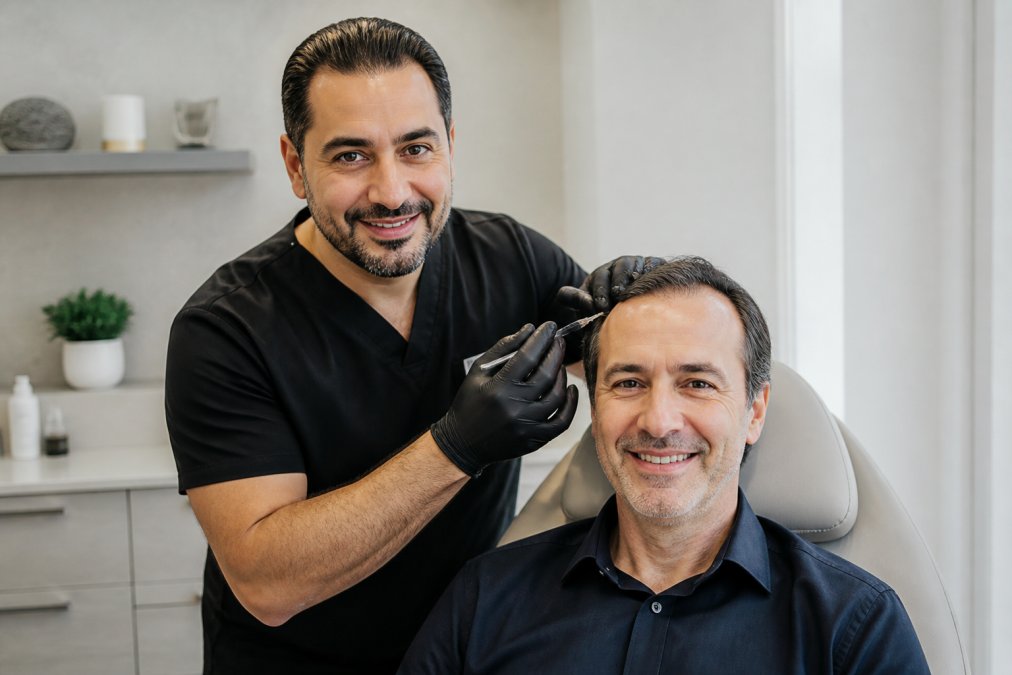
PRP hair restoration is a physician-performed procedure that uses your own blood plasma, concentrated with platelets and growth factors, to stimulate hair follicle activity in areas of thinning. A small blood sample is drawn, processed in a centrifuge to separate the platelet-rich layer, then injected into the scalp. The goal is to support follicle stimulation and improve blood flow to the follicle environment. This guide from Medical Aesthetics and Lasers explains what the evidence actually shows.
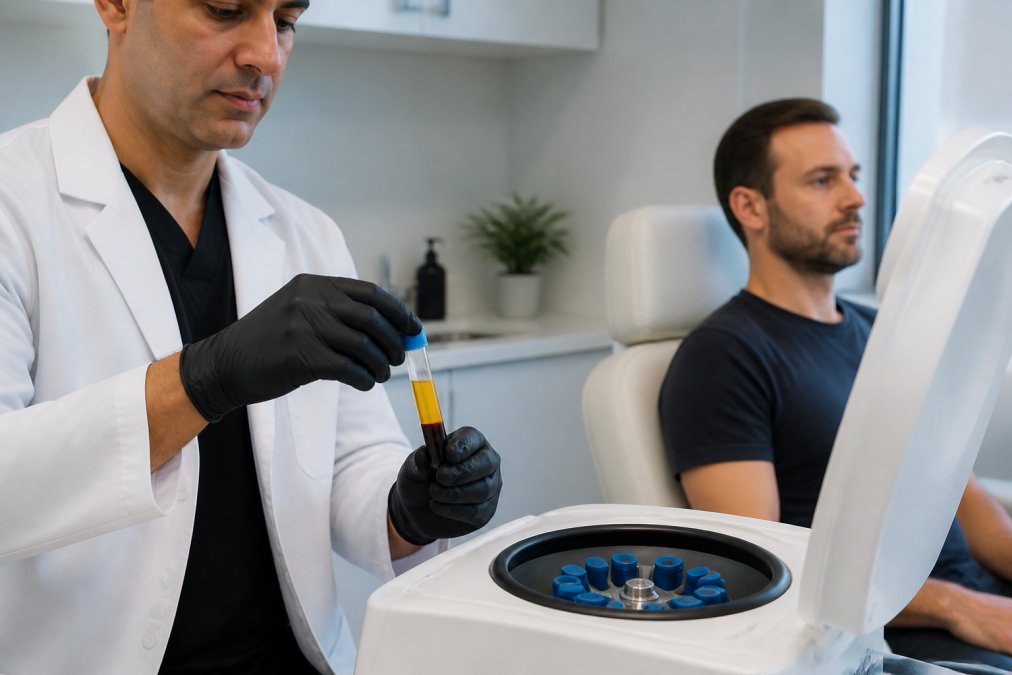
The process relies on an autologous approach, meaning the material comes from your own body, which is why allergic reactions are uncommon. Growth factors in the plasma are thought to support the anagen phase, the active growth stage of the hair cycle, while reducing the proportion of follicles stuck in the telogen phase. According to the American Academy of Dermatology's overview of hair loss treatments, platelet-rich plasma is considered a reasonable option for certain types of hair loss, though results are not guaranteed and response varies between patients.
PRP Hair Restoration Success Rates: What Clinical Studies Show
There is no single success rate for PRP hair restoration, and any source that quotes one definitive percentage is oversimplifying the evidence. What the published literature actually shows is a range of outcomes that cluster around a few consistent patterns. Most controlled trials and clinical reviews report that a majority of treated patients with androgenetic alopecia see measurable improvement, typically defined as increased hair density, increased hair shaft diameter, or reduced shedding, while a meaningful minority see little to no change. The American Academy of Dermatology's overview of hair loss treatments frames PRP as a reasonable option for certain types of hair loss while noting that response is not universal, which is the same conclusion the clinical literature reaches.
What the Numbers Actually Look Like
Across the trials that use objective measurement, the most commonly reported outcomes are:
- Hair density: Many studies report a statistically significant increase in hairs per square centimeter in treated areas versus baseline or versus placebo, with gains typically emerging between the three- and six-month marks.
- Hair shaft diameter: Several trials measure an increase in the thickness of individual hairs, which patients often perceive as fuller coverage even when the total hair count changes modestly.
- Shedding reduction: Patient-reported shedding often improves earlier than visible regrowth, sometimes within the first few weeks after the initial series.
- Patient satisfaction: Satisfaction rates in published series tend to run higher than objective density gains, which is an important nuance, patients often notice texture, shedding, and overall appearance improvements that a single density metric does not capture.
Why Published Success Rates Vary So Much
Study results differ for predictable, mechanical reasons, not because the treatment itself is inconsistent in some mysterious way:
- Preparation method: Different centrifuge protocols and commercial kits produce different platelet concentrations and different ratios of red blood cells to plasma. A preparation with a low platelet yield is not the same product as a preparation with a high, measured yield, even though both are called "PRP."
- Platelet concentration: There is no universal target. Some protocols aim for a modest multiple of baseline platelet count; others push higher. The relationship between concentration and follicle response is not linear, and very high concentrations have not consistently outperformed moderate ones.
- Injection schedule: The number of sessions, the interval between them, and whether maintenance is included all change the measured outcome at any given endpoint.
- Measurement method: Some trials count hair shafts under trichoscopy or biopsy; others rely on standardized photography; others use patient satisfaction surveys. A study measuring visible regrowth over six months is not comparable to one tracking shedding reduction at twelve weeks.
- Patient population: Trials enrolling early-stage thinning patients will report better averages than trials enrolling patients with long-standing, advanced hair loss.
This variability is the single biggest reason to be skeptical of any clinic quoting one definitive percentage. PRP produces measurable benefit for many patients, produces little change for some, and the difference is largely explained by candidacy, preparation quality, and protocol consistency, all of which are knowable before you commit to treatment.
How Many PRP Sessions for Hair Loss Do You Actually Need?
Most protocols start with three sessions spaced roughly four to six weeks apart, followed by maintenance sessions every three to six months. That is the common structure, not a fixed rule. Your dermatological assessment will shape the actual schedule.
| Phase | Typical Frequency | Purpose |
|---|---|---|
| Initial series | 3 sessions, 4-6 weeks apart | Establish follicle stimulation |
| Early maintenance | Every 3-6 months | Sustain hair density gains |
| Long-term | 1-2 sessions per year | Slow hair loss progression |
A common mistake is stopping after the first series. PRP is not a one-time fix; without maintenance, gains tend to fade as hair loss progression continues.
PRP Hair Restoration Side Effects and Safety Profile
PRP hair restoration side effects are generally mild and short-lived because the material is autologous. The most commonly reported issues are temporary scalp tenderness, mild swelling, and brief pinpoint bleeding at injection sites. Post-treatment recovery is typically a day or two; most people return to normal activity immediately.
Serious complications are rare but possible: infection, prolonged inflammation, or an unsatisfactory cosmetic result. Anyone with a bleeding disorder, active scalp infection, or certain blood conditions may not be a candidate. This is general information, not medical advice. Suitability is determined after an evaluation with a qualified professional.
Is PRP FDA Approved for Hair Loss?
No. The FDA has not approved PRP as a treatment for hair loss. The FDA does clear the devices used to prepare PRP for certain purposes, but it does not approve PRP itself as a hair regrowth therapy. This is a common point of confusion, and clinics that claim "FDA-approved PRP for hair loss" are overstating the regulatory position. The FDA's guidance on platelet-rich plasma clarifies that PRP is regulated as a biologic product with specific requirements, and hair restoration falls outside its approved indications. That does not mean PRP is unsafe or ineffective; it means the evidence base is still developing.
Who Is a Good Candidate and What Affects Your Results
The best candidates tend to have early to moderate hair thinning with active follicles still present. If a follicle has fully scarred over, PRP cannot revive it. Factors that influence results include:
- Stage of hair loss: Earlier intervention generally responds better
- Underlying cause: Androgenetic alopecia responds differently than scarring alopecia
- Consistency: Skipping maintenance sessions undercuts gains
- Scalp health: Inflammation or infection must be addressed first
- Preparation quality: Standardized centrifugation matters
A dermatological assessment is the only reliable way to know whether PRP fits your situation. At Medical Aesthetics and Lasers, Dr. Ayaz Khan, MD evaluates each patient individually, because a treatment plan built on guesswork rarely produces natural-looking results.
How to Improve Your Odds: Maintenance, Preparation, and Combination Therapy
Three levers genuinely move PRP outcomes, and most articles mention them without explaining how they work. Here is the mechanism-level version.
1. Maintenance Protocols: The Long Game Most Patients Underestimate
PRP does not stop the underlying biology of androgenetic alopecia. It stimulates follicle activity, but the genetic and hormonal drivers of hair loss continue. That is why the initial series, typically three sessions spaced four to six weeks apart, is best understood as a loading phase, not a cure.
A common pattern in clinical practice is:
- Initial series: Three sessions, four to six weeks apart, to establish follicle stimulation.
- Early maintenance: Sessions every three to six months to sustain density gains.
- Long-term maintenance: One to two sessions per year to slow progression.
The most common reason patients report fading results is not that PRP stopped working, it is that they stopped the maintenance schedule. When maintenance lapses, gains tend to regress toward the underlying trajectory of the hair loss. This is the single most important expectation to set before starting.
2. Standardization of Preparation: Why Two "PRP" Treatments Are Not the Same
This is the biggest under-discussed variable in the entire field. PRP is not a standardized drug; it is a preparation, and the preparation determines what is actually injected.
Key variables include:
- Centrifuge speed and time: Different protocols use different g-forces and spin durations, which change how cleanly platelets separate from red blood cells and plasma.
- Kit design: Commercial PRP kits vary in tube geometry, anticoagulant, and separation mechanism, and they produce different platelet yields from the same blood sample.
- Platelet concentration measurement: Clinics that actually measure platelet yield can confirm they are injecting a therapeutic concentration. Clinics that do not are guessing.
- Red blood cell contamination: A preparation with significant red blood cell carryover can cause more post-injection inflammation and discomfort without adding benefit.
A practical question to ask any provider: "How do you standardize preparation, and do you measure platelet concentration?"
3. Combination Therapy Synergy: PRP Rarely Works Best Alone
PRP is most often used as part of a regimen rather than as a standalone treatment, and the combinations have different mechanisms that can complement each other:
- PRP + topical minoxidil: Minoxidil extends the anagen phase and improves follicular blood flow; PRP delivers growth factors directly to the follicle environment. The two approaches act through different pathways, which is why many clinicians pair them.
- PRP + finasteride: Finasteride addresses the hormonal driver of androgenetic alopecia by reducing DHT conversion; PRP supports follicle activity. For appropriate candidates, this combination targets both the cause and the follicular response.
- PRP + microneedling: Microneedling creates controlled micro-channels that may improve absorption of topicals and may itself stimulate growth factor release. Some protocols combine it with PRP in the same session.
- PRP + exosome or PRF therapies: These are newer regenerative approaches. Evidence is still developing, and patients should ask for the specific rationale and any supporting data before adding them.
The takeaway is not that combination therapy is always better, it is that PRP is rarely optimized in isolation, and the right combination depends on the underlying cause of your hair loss.
4. Patient-Reported Outcomes: What Patients Actually Notice
Clinical density metrics matter, but so does what patients experience. Patient-reported outcome measures (PROMs) in PRP research commonly track:
- Perceived hair thickness and fullness
- Reduced shedding
- Scalp appearance and coverage
- Overall satisfaction and quality of life
Interestingly, satisfaction scores in published series often run higher than objective density gains. That gap is worth understanding: patients notice texture, shedding, and overall appearance changes that a single density number does not capture. When evaluating a provider, ask how they track your results over time, standardized photography, trichoscopy, and a simple satisfaction check-in at each visit are all reasonable. A clinic that measures results is a clinic that can adjust your protocol when something is not working.
Conclusion: Setting Realistic Expectations for PRP Hair Restoration
PRP hair restoration success rates are best understood as a range, not a guarantee. Many patients see meaningful improvement in hair density and shedding reduction with a structured protocol and consistent maintenance; others see limited change. The difference usually comes down to candidacy, preparation quality, and follow-through. If you are exploring PRP or exosome-based hair restoration, Medical Aesthetics and Lasers offers physician-led evaluations, personalized treatment plans, and regenerative options including PRP, PRF, and exosome therapies. Book a consultation to find out whether you are a good candidate.
Frequently Asked Questions
Does PRP really regrow hair?
PRP can stimulate hair follicle activity and improve hair density in some patients, but it is not a guaranteed cure. Clinical studies show variable results, with many patients experiencing reduced shedding and visible regrowth after a series of sessions. Success depends on factors like the cause of hair loss, overall health, and adherence to a maintenance plan. A dermatological assessment can help determine if you are a suitable candidate.
How many PRP sessions are typically required for hair restoration?
Most treatment protocols recommend an initial series of 3 to 4 sessions spaced about 4 to 6 weeks apart, followed by maintenance sessions every 3 to 6 months. The exact number depends on your degree of hair thinning, how you respond, and whether PRP is combined with other therapies. Your physician will tailor the schedule after evaluating your scalp and medical history.
What are the common side effects of PRP hair treatments?
Because PRP uses your own blood, allergic reactions are rare. Typical side effects include mild tenderness, swelling, or redness at the injection sites, which usually resolve within a few days. Some patients report a temporary headache. Serious complications are uncommon when the procedure is performed by a qualified medical professional using sterile technique. Discuss any concerns with your provider before treatment.
Is PRP FDA approved for hair loss?
The FDA has not approved PRP specifically for hair loss treatment. However, PRP is cleared for certain other medical uses, and physicians may use it off-label for hair restoration. Off-label use is legal and common in medicine when supported by clinical evidence. If you are considering PRP, ask your physician about the evidence and what it means for your situation.
Hair thinning rarely reverses on its own, and guessing at treatments wastes both time and money. A physician-led evaluation gives you a clear answer about whether PRP hair restoration fits your situation. Medical Aesthetics and Lasers offers personalized treatment plans, regenerative options including PRP and exosome-based therapies, and flexible financing, all delivered by Dr. Ayaz Khan, MD. Get started with Medical Aesthetics and Lasers and find out what is realistic for your hair.