 ultimate-guide
Physician-Administered Botox: Why Expertise Matters | 2026
Table of Contents
- What Sets Physician-Administered Botox Apart
- Botox Facial Anatomy Expertise: Why Nerve Pathways and Injection Depth Matter
- The Risks of Non-Physician Botox: What Can Go Wrong
- How to Choose a Botox Provider You Can Trust
- Medical vs. Cosmetic Botox: More Than Wrinkle Reduction
- The Botox-Plus Approach: Combining Neuromodulators with Other Treatments
- Frequently Asked Questions
Last Updated: September 13, 2026
What Sets Physician-Administered Botox Apart
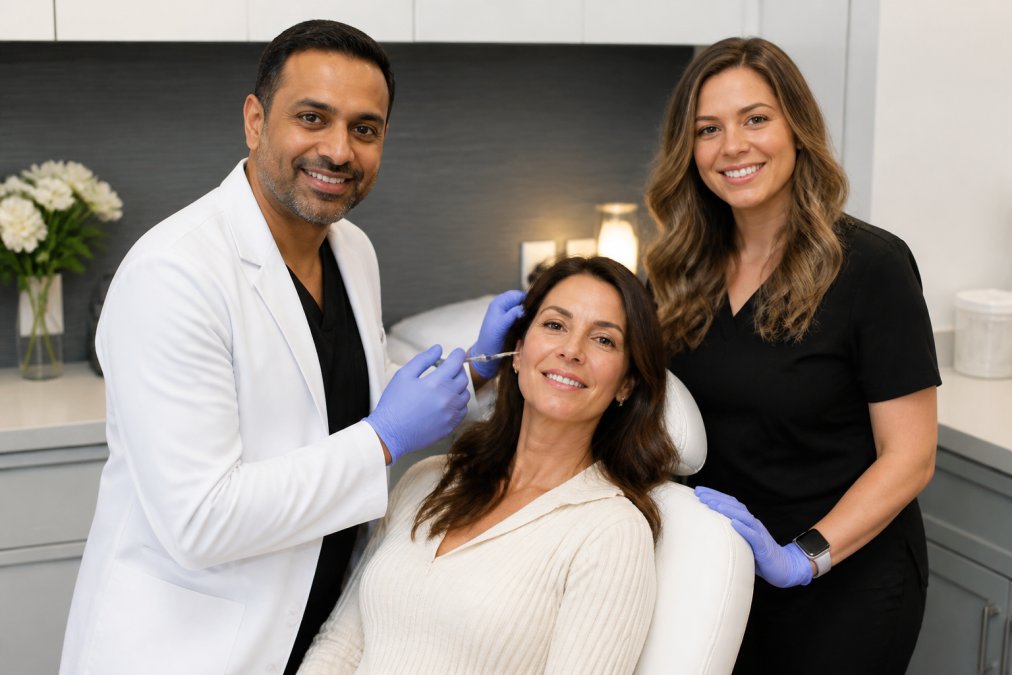
Physician-administered Botox means a licensed physician performs your injection after conducting a full medical evaluation, rather than a technician following a standardized template. This distinction matters because the face is not a uniform canvas, and neurotoxin placement demands clinical judgment that goes beyond a weekend certification course. At Medical Aesthetics and Lasers, every injectable treatment begins with a physician assessment of your facial anatomy, muscle activity, and medical history. The difference between a medical evaluation and a quick injection is the difference between treating your face as a system and treating it as a checklist.
The Difference Between a Medical Evaluation and a Quick Injection
A medical evaluation includes reviewing your health history, assessing muscle movement patterns, and identifying any contraindications before a needle ever touches your skin. Quick-injection setups skip most of this. A thorough consultation can lead to higher patient satisfaction because the provider understands their goals and anatomy before choosing dosage and placement. A physician also recognizes when a neuromodulator is not the right tool for your concern, which saves you money and avoids disappointing results.
Botox Facial Anatomy Expertise: Why Nerve Pathways and Injection Depth Matter
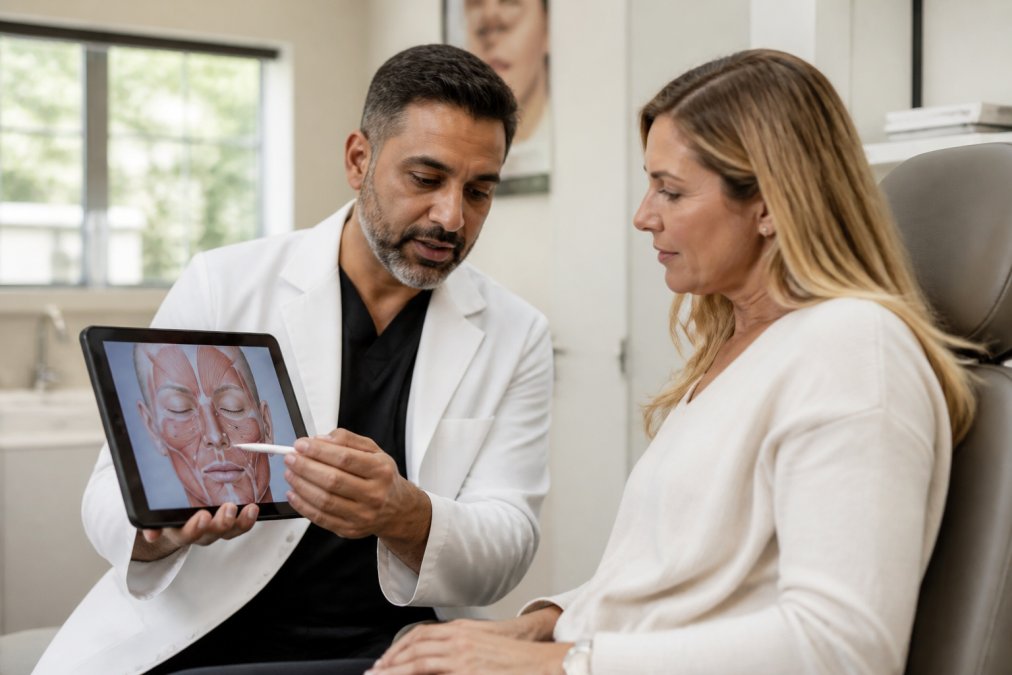
Botox facial anatomy expertise determines whether your result looks natural or frozen. The neuromodulator works by temporarily reducing muscle contraction, and where it lands in the dermal layers and underlying muscle dictates everything. Inject too deep and you risk affecting unintended muscles. Inject too shallow and the product may not reach the target. Physicians trained in facial anatomy understand nerve pathways, vascular mapping, and how injection depth changes outcomes across different areas of the face.
How Anatomical Variation Affects Your Results
No two faces have identical muscle patterns. Some people have stronger depressor muscles, asymmetric brow position, or accessory muscles that a standard injection map does not account for. A common mistake in high-volume settings is treating every forehead the same way. Anatomical variation awareness means your injector adjusts placement and dosage to your specific muscle activity, which is how you avoid asymmetry and achieve a balanced cosmetic outcome.
The Risks of Non-Physician Botox: What Can Go Wrong
The risks of non-physician Botox are not limited to a mediocre result. They include complications that require a clinician to recognize, triage, and treat in real time. When an injector lacks training in facial vascular anatomy, the needle can land in or adjacent to a vessel, and the neurotoxin can migrate beyond the intended muscle. The result is not just asymmetry, it can be ptosis (a drooping eyelid), brow heaviness, diplopia (double vision), or, in rare cases, dysphagia (difficulty swallowing) when the toxin spreads to the pharyngeal muscles.
The reason these outcomes cluster around non-physician injectors is mechanical, not moral. A standardized injection map assumes a standardized face. It does not account for the depth of the frontalis at the hairline, the position of the supraorbital and supratrochlear neurovascular bundles, or the accessory muscles that appear in a meaningful share of the population. A physician is trained to read those variations before the needle is loaded.
Vascular Occlusion and Emergency Complication Management
Vascular occlusion is most often discussed in the context of dermal fillers, but neurotoxin injections carry their own vascular risk when performed without anatomical knowledge. The distinction matters because the emergency response is different:
- Filler occlusion is treated with high-dose hyaluronic acid (hyaluronidase) injected into the affected territory, plus warm compresses, massage, and close monitoring for skin necrosis.
- Neurotoxin complications cannot be reversed with an enzyme. Management is supportive and time-based: identifying the affected muscle, documenting the deficit, considering ptosis drops for eyelid involvement, and monitoring airway and swallowing function if the toxin has spread.
That asymmetry in reversibility is the single most important thing a patient can understand. A physician knows which complications have an antidote and which do not, and that knowledge shapes how conservatively they dose, where they place the needle, and how quickly they escalate.
Emergency complication management in a physician-led setting may include on-site reversal agents, a written complication protocol, vascular assessment before injection, and documented follow-up.
A sterile environment and accurate dosing reduce risk. The ability to respond when something goes wrong is what separates a medical setting from a spa.
Why the Timeline Matters
Most neurotoxin complications are not visible on the day of treatment. Ptosis and brow asymmetry typically appear 3 to 7 days post-injection as the toxin reaches full effect. A non-physician injector working from a booth or a med-spa counter may not have a follow-up pathway at all. A physician-led practice builds the follow-up into the treatment plan, which is why the complication is caught while it is still manageable rather than after it has settled.
How to Choose a Botox Provider You Can Trust
Choosing a Botox provider starts with verifying credentials, not comparing prices. The reason is structural: in most states, a nurse, physician assistant, or even a non-licensed technician can legally inject neuromodulators under varying levels of physician supervision, and the word "supervision" can mean anything from a physician in the next room to a physician who has never met the patient. Understanding that spectrum is the difference between a safe treatment and a gamble.
How to Verify a Provider's Credentials
Do not rely on the practice's website. Verify independently:
- Board certification, Look up the physician on the American Board of Medical Specialties (ABMS) or the American Osteopathic Association (AOA) certification lookup. A "board-certified" injector should be certified in a recognized specialty such as dermatology, plastic surgery, or otolaryngology, not a self-designated aesthetic board.
- State medical license, Every state medical board publishes a license lookup. Confirm the license is active and has no disciplinary actions.
- Nursing and PA licenses, If the injector is a nurse or PA, verify their license through the state board of nursing or medical board, and ask who the supervising physician is by name.
- Supervision arrangement, Ask whether the supervising physician is on site, available by phone, or simply signing off on charts. The answer changes the risk profile of your treatment.
- Facility accreditation, A physician-led practice may have accreditation by a recognized body and written emergency protocols on site.
What to Ask During a Consultation
A real consultation is a medical evaluation, not a sales pitch. Ask these questions and listen for specifics, not reassurance:
- Who will actually perform the injection, and what is their license and training?
- Is the supervising physician on site during treatment, and have they reviewed my history?
- What is your protocol if I develop ptosis, asymmetry, or a vascular complication?
- Do you have reversal agents on site, and where are they stored?
- How do you decide dosage and injection points, is it a template or based on my anatomy?
- What is your follow-up process, and who do I contact if something looks wrong at day 3?
A physician-led practice like Medical Aesthetics and Lasers builds the consultation around these questions, and suitability is always determined after a medical evaluation rather than a sales conversation. If a provider cannot answer them without hedging, that is your answer.
The Price Trap
Lower per-unit pricing is the most common reason patients choose a non-physician injector, and it is also the most misleading. A discounted unit price often reflects a lower-cost injector, a diluted product, or a practice that has not invested in emergency protocols or follow-up. The true cost of Botox is not the price per unit, it is the price of a result you have to live with for three to four months, or a complication you have to manage without a physician.
Medical vs. Cosmetic Botox: More Than Wrinkle Reduction
Medical Botox treats clinical conditions, while cosmetic Botox addresses dynamic wrinkles. The same neuromodulator is used for chronic migraine, muscle spasticity, and certain bladder conditions under medical indications, and these applications require physician oversight by definition. Off-label uses in aesthetic medicine, such as treating jaw clenching or excessive sweating, also benefit from a physician's diagnostic eye. Understanding the difference matters because a provider who only knows cosmetic injection patterns may miss underlying conditions that a medical evaluation would catch.
The Botox-Plus Approach: Combining Neuromodulators with Other Treatments
The Botox-plus approach pairs neuromodulators with treatments that address what Botox cannot. Botox relaxes muscles that cause dynamic wrinkles, but it does not restore volume loss or improve skin texture. Combining it with dermal fillers, biostimulators, or skin resurfacing can produce more complete facial rejuvenation. Many patients in their 40s and beyond find that a layered plan, physician-designed to match their anatomy and goals, delivers more natural-looking results than any single treatment alone.
Frequently Asked Questions
Is it better to get Botox from a dermatologist or plastic surgeon?
Both dermatologists and plastic surgeons are qualified to administer Botox, but the key factor is whether a licensed physician performs or directly supervises your injection. Physicians trained in facial anatomy understand nerve pathways, muscle function, and injection depth, which reduces the risk of complications like asymmetry or vascular occlusion. At Medical Aesthetics and Lasers, Dr. Ayaz Khan, MD evaluates each patient before treatment to determine whether physician-administered Botox is appropriate for your goals.
What are the risks of receiving Botox from an untrained provider?
Non-physician injectors without proper clinical training may lack the anatomical knowledge to avoid critical structures. The risks of non-physician Botox include asymmetry, eyelid drooping, vascular occlusion, and poor cosmetic outcomes. In rare cases, improper injection depth can cause adverse events requiring emergency complication management. A physician-administered approach ensures that someone with medical training evaluates your facial anatomy, reviews your health history, and manages any complications that arise.
How can I verify the credentials of my Botox injector?
Ask directly who will perform your injection and what medical training they have. Check whether the provider is board-certified, whether a licensed physician supervises the practice, and whether the clinic follows standard safety protocols. You can verify board certification through the American Board of Medical Specialties. A reputable provider will welcome these questions and explain their clinical training and consultation process without pressure.
How does a physician's anatomical knowledge improve Botox outcomes?
Physicians study facial anatomy, nerve pathways, and muscle paralysis mechanisms in depth during medical training. This Botox facial anatomy expertise allows them to assess anatomical variation between patients, choose the correct injection depth, and adjust dosage accuracy for natural-looking results. A physician can also recognize early signs of complications and provide appropriate complication management if needed.
Aging shows up through muscle movement, volume loss, and skin quality at the same time, and no single injection addresses all three. At Medical Aesthetics and Lasers, Dr. Ayaz Khan, MD brings over two decades of clinical practice to every treatment plan, combining physician-administered Botox with dermal fillers, biostimulators, and skin treatments tailored to your anatomy. Get started with Medical Aesthetics and Lasers and build a plan that reflects how your face actually ages.