 ultimate-guide
Natural-Looking Lip Fillers: A Complete Guide
Table of Contents
- What Natural-Looking Lip Fillers Actually Are
- Why Hyaluronic Acid Matters for Subtle Enhancement
- The Lip Augmentation Consultation: What to Expect
- The Injection Process and Achieving Facial Symmetry
- Lip Filler Recovery Time and Aftercare
- Dermal Filler Safety Standards and What Matters
- Maintaining Your Results and Knowing When to Touch Up
- Frequently Asked Questions
Last Updated: September 25, 2026
What Natural-Looking Lip Fillers Actually Are
Natural-looking lip fillers are injectable treatments designed to enhance lip volume and definition while maintaining facial harmony. The goal is to restore volume lost to aging, improve symmetry, or add subtle fullness that looks natural on your face.
A natural-looking lip filler result means your lips still move naturally, maintain their original shape, and don't draw attention by looking obviously enhanced.
This approach requires skill and restraint. The provider must understand facial proportions and place product strategically rather than simply filling the entire lip. At Medical Aesthetics and Lasers, physician-administered lip enhancement prioritizes this precision.
Why Hyaluronic Acid Matters for Subtle Enhancement
Hyaluronic acid is a naturally occurring substance that holds water and maintains hydration. When used in dermal fillers, it provides volume while allowing the lips to retain natural movement and feel, integrating with tissue rather than sitting as a foreign material.
Hyaluronic acid attracts and binds water molecules, creating an immediate plumping effect that fully develops over two weeks as the filler settles. This gradual integration is why natural looking lip fillers with hyaluronic acid avoid that "just injected" appearance.
Hyaluronic acid fillers can be dissolved using hyaluronidase if you're unhappy with results, making them reversible and ideal for first-time patients.
Well-hydrated lips look plumper and more natural, which is why aftercare emphasizes drinking water and avoiding dehydrating activities in the days following treatment.
The Lip Augmentation Consultation: What to Expect
Your consultation is where natural-looking results begin. A qualified provider will assess your lip anatomy, listen to your goals, and explain what's realistically achievable with your facial structure.
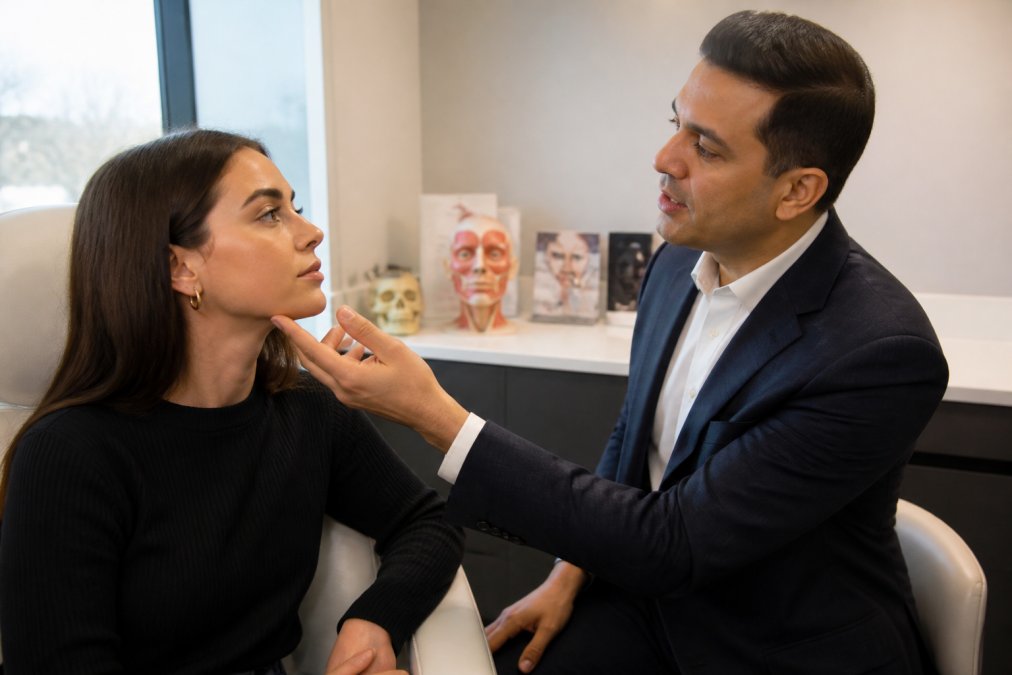
Expect the provider to ask about your medical history, previous lip treatments, and cold sore history. They'll examine your lip proportions, symmetry, and volume loss, and may take photos for documentation.
A good consultation involves honest conversation about realistic outcomes. Natural-looking results come from working within your anatomy, not fighting against it.
The provider should explain the filler type, product amount, longevity, cost, and what to expect during and after the procedure. If a provider rushes through this, that's a red flag.
The Injection Process and Achieving Facial Symmetry
The injection process typically takes 15 to 30 minutes. Your provider will apply a topical numbing agent, then use a fine needle to inject hyaluronic acid filler into specific areas of the lips using techniques tailored to your goals.
A skilled provider preserves your natural asymmetries while correcting obvious imbalances, avoiding over-correction into an unnatural mirror image.
The injection process considers the cupid's bow and vermilion border, anatomical landmarks key to results that look intentional rather than puffy.
You'll feel pressure and mild discomfort during injections, but the numbing agent keeps it manageable. If you're particularly sensitive, discuss additional numbing techniques or splitting the procedure into two sessions.
Lip Filler Recovery Time and Aftercare
Recovery is generally quick, with most people returning to work within 24 to 48 hours. The first two weeks determine how natural your final results appear.
Day 1 (Injection Day) Swelling peaks within 24 hours and is normal. Avoid touching your lips, apply ice packs for 10-15 minutes, and avoid hot beverages, spicy foods, and strenuous activity. Sleep with your head elevated on two pillows.
Days 2-3 (Peak Swelling Period) Swelling peaks and lips may feel lumpy as filler settles. Avoid intense exercise, saunas, and activities that raise heart rate. Drink 8-10 glasses of water daily. Avoid alcohol and blood-thinning medications; use acetaminophen for pain relief.
Days 4-7 (Subsiding Swelling) Swelling decreases noticeably. Resume light exercise by day five or six. Apply broad-spectrum SPF 30+ lip balm daily to prevent UV damage.
Days 8-14 (Settling Phase) Most swelling and bruising have resolved. Your results begin to look most natural as filler integrates with tissue. Continue hydration and SPF protection. Avoid aggressive lip exfoliation. Many providers schedule touch-ups at two weeks to assess results.
Weeks 3-4 and Beyond By week three, results are stable and fully visible. Resume all normal activities. Continue sun protection and hydration to extend filler longevity.
Managing Bruising Bruising typically resolves within 7-10 days. Silicone-based makeup can cover it. Arnica gel applied after 24 hours may help, though evidence is mixed. Avoid heat, massage, and pressure on bruised areas.
Hydration and Filler Longevity Hyaluronic acid fillers depend on tissue hydration to maintain their plumping effect. Consistent hydration over months between touch-ups helps filler last closer to 12 months rather than fading by six months.
When to Contact Your Provider Contact your provider immediately if you experience severe pain unresponsive to acetaminophen, signs of infection, difficulty breathing or swallowing, or asymmetrical swelling. Mild swelling, bruising, and tenderness are normal.
Dermal Filler Safety Standards and What Matters
FDA-approved dermal fillers undergo rigorous evaluation for safety and biocompatibility. However, safety depends far more on who administers the filler and whether you're a suitable candidate than on the product itself.
Why Provider Credentials Matter A physician or nurse injector with formal training in facial anatomy understands where to place product and how to manage complications. An untrained provider can cause tissue damage, filler migration, infection, or vascular occlusion. Verify your provider is a licensed physician, nurse practitioner, or registered nurse with specific training in dermal filler injection.
Hyaluronic Acid Fillers and Risk Profile Hyaluronic acid fillers carry lower risk than permanent alternatives because they're biocompatible and reversible. Allergic reactions are rare. The most frequent side effects are temporary swelling, bruising, and mild tenderness, which resolve within 7-14 days.
Medical History Screening: Contraindications Checklist Before receiving lip fillers, inform your provider if you have any of the following contraindications:
- Active cold sores or herpes simplex virus (HSV) infection: Your provider may recommend antiviral medication (such as valacyclovir) starting one day before treatment to prevent an outbreak.
- Pregnancy or breastfeeding: Most providers recommend postponing elective cosmetic procedures during pregnancy and breastfeeding.
- Severe allergies or history of anaphylaxis: Fillers may not be appropriate if you have a documented severe allergic reaction to hyaluronic acid or other injectables.
- Autoimmune conditions (such as lupus, rheumatoid arthritis, or scleroderma): Discuss your specific condition with your provider to determine safety.
- Immunosuppression or immunocompromised status: Your infection risk increases; inform your provider before proceeding.
- Bleeding disorders or anticoagulant use: Your bruising and hematoma risk increases. Your provider may recommend adjusting your medication schedule in consultation with your primary care physician.
- Recent facial surgery or procedures: Wait at least two weeks after laser treatment, chemical peels, or surgical procedures before getting fillers.
- Keloid or hypertrophic scar history: Discuss this with your provider, as fillers can occasionally trigger abnormal scarring in prone individuals.
- Uncontrolled diabetes: High blood sugar impairs wound healing and increases infection risk. Inform your provider of your status.
- Active skin infection or inflammation: Postpone treatment until acne, eczema flare-ups, or other active skin conditions have healed.
- Unrealistic expectations or body dysmorphic disorder: Your provider should discuss whether fillers are the right choice if you're seeking them to address deep psychological concerns rather than for subtle enhancement.
Medications That Increase Bruising Risk Inform your provider if you take aspirin, NSAIDs, anticoagulants, antiplatelet medications, fish oil, vitamin E, ginkgo biloba, garlic supplements, ginger, or alcohol. Your provider may recommend stopping these 3-7 days before your appointment. Never stop prescription medications without consulting your primary care physician.
Rare but Serious Complications Vascular occlusion (blockage of blood flow) can occur if filler is injected into a blood vessel.
Maintaining Your Results and Knowing When to Touch Up
Hyaluronic acid fillers typically last 6 to 12 months, though this varies based on your metabolism, the amount injected, and the specific product used. Some people metabolize filler faster than others. As the filler gradually breaks down, your lips slowly return to their baseline volume. This gradual fade means you won't suddenly look dramatically different, you'll notice your lips getting subtly less full over time.
Frequently Asked Questions
What makes natural-looking lip fillers different from overdone results?
Natural-looking lip fillers enhance your lips while preserving your unique features and proportions. A qualified physician focuses on subtle volume restoration, maintaining your cupid's bow and vermilion border, and balancing your lips with your overall facial structure. The goal is enhancement others notice as 'you look refreshed,' not 'you had work done.' Physician-administered injections allow for precise placement and dosing that amateur or rushed treatments often miss.
How long does lip filler recovery time typically last?
Most people experience swelling and mild bruising for 3-7 days after lip filler injection. Swelling peaks around day 2-3, then gradually subsides. You can usually return to normal activities immediately, though strenuous exercise and heat exposure should be avoided for 24-48 hours. Bruising varies by individual and injection technique. By day 10-14, most visible effects resolve. Full results appear after swelling completely settles, usually within 2 weeks.
What should I discuss during a lip augmentation consultation?
A thorough lip augmentation consultation includes your aesthetic goals, medical history, any medications or supplements you take, and previous filler experiences. The physician should assess your lip shape, proportions, and how they relate to your facial structure. Discuss specific concerns: thinning lips, asymmetry, loss of definition, or desire for subtle volume. Ask about the type of filler, injection technique, expected longevity, and realistic outcomes. A good consultation also covers aftercare, potential side effects, and when to schedule touch-ups.
Are dermal fillers safe, and what standards should I look for?
FDA-approved dermal fillers used by qualified physicians have strong safety profiles when administered correctly. Look for a board-certified or physician-led provider who uses FDA-approved products, maintains sterile technique, and understands facial anatomy. Your provider should discuss your medical history, including any allergies or contraindications. Ask about the specific filler brand and its safety record. Complications are rare but can include allergic reactions, infection, or filler migration. Choosing a physician with extensive training and experience significantly reduces risk.