 blog
blog
Personalized Anti-Aging Treatment Plans: A 2026 Guide
Table of Contents
- What Makes a Personalized Anti-Aging Treatment Plan Different
- Understanding Aging Vectors and Individual Skin Assessment
- The Medical Aesthetic Consultation Process
- Combining Injectables and Regenerative Therapy for Synergistic Results
- Anti-Aging Treatment Timeline: Phases and Realistic Expectations
- Natural-Looking Results: Avoiding Over-Treatment
- Adapting Your Plan as Skin Evolves
- Frequently Asked Questions
Last Updated: September 19, 2026
What Makes a Personalized Anti-Aging Treatment Plan Different
A personalized anti-aging treatment plan is a customized approach to facial rejuvenation and skin health designed specifically for your unique aging patterns, skin type, and aesthetic goals. Aging doesn't follow a one-size-fits-all timeline, your skin's needs at 45 differ dramatically from someone else's at the same age. This is where personalized anti-aging treatment plans separate themselves from generic skincare routines or off-the-shelf procedures.
The difference comes down to precision. A personalized plan starts with understanding your individual aging vectors, the specific ways your skin is changing. Are you losing volume? Experiencing skin laxity? Dealing with hyperpigmentation or fine lines? The answers determine everything that follows.
This targeted strategy delivers better results because it addresses what's actually happening to your skin. You avoid wasting time and resources on treatments that don't match your needs and achieve natural-looking results that enhance your appearance.
Understanding Aging Vectors and Individual Skin Assessment
Aging vectors are the specific directions and patterns your skin changes over time. Understanding them is the foundation of any effective personalized anti-aging treatment plan.
Your skin ages through several key mechanisms:
- Volume loss, Fat and collagen diminish, creating hollowness in cheeks, temples, and under eyes
- Skin laxity, Loss of elasticity causes sagging and loose skin, especially along the jawline and neck
- Fine lines and wrinkles, Repetitive facial expressions and sun damage create surface creases
- Hyperpigmentation, Uneven tone and age spots develop from cumulative sun exposure
- Texture changes, Cellular turnover slows, creating rough or dull appearance
- Loss of definition, Facial contours flatten as supporting structures weaken
An individual skin assessment identifies which vectors are most active in your face. A thorough evaluation examines your skin under different lighting, assesses elasticity and hydration, reviews your sun damage history, and considers your genetic predisposition to aging.
During a clinical consultation, your provider should analyze your specific combination of aging vectors. Someone with primarily volume loss needs different treatment than someone with significant skin laxity.
The Medical Aesthetic Consultation Process
The medical aesthetic consultation process is where personalization begins. It's a diagnostic session that determines which treatments will actually work for your skin.
A proper consultation includes these essential steps:
- Comprehensive skin analysis, Your provider examines your face in natural light, asking about your skin history, sun exposure, previous treatments, and current skincare routine
- Photography and documentation, Before and baseline images create a reference point for measuring progress
- Discussion of aesthetic goals, You articulate what you want to achieve, not what you think you should want
- Treatment recommendations, Your provider suggests specific modalities based on your aging vectors and goals
- Timeline and phasing, A realistic schedule for treatments, accounting for healing and results timing
- Expectations conversation, Honest discussion about what's achievable and what constitutes natural-looking results
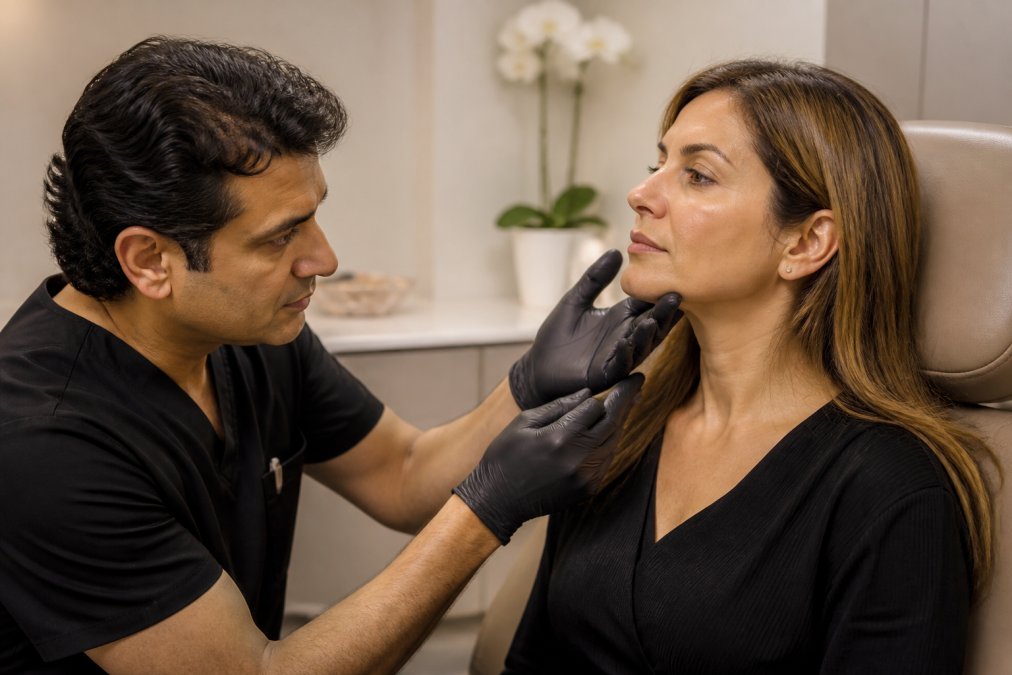
A red flag appears when a provider rushes through this process or immediately recommends their most expensive treatments. Genuine personalized anti-aging treatment plans take time to develop. Your provider should ask questions, listen to your concerns, and explain the reasoning behind recommendations.
Combining Injectables and Regenerative Therapy for Synergistic Results
The most effective personalized anti-aging treatment plans combine multiple modalities for synergistic effects, where combined treatments produce better outcomes than any single treatment alone.
Understanding Treatment Synergy
Consider volume loss. Dermal fillers add immediate volume, but don't address underlying collagen depletion. Adding a biostimulator like Sculptra stimulates your body's own collagen production over months, immediate improvement plus long-term enhancement.
Common synergistic combinations include:
- Neuromodulators + fillers, Botox softens dynamic lines while fillers restore volume
- Injectables + thread lifts, Neuromodulators and fillers address fine lines and volume while threads provide structural support for skin laxity
- Injectables + regenerative therapy, PRP or exosome treatments enhance skin health at the cellular level
- Chemical peels + laser treatments, Peels address hyperpigmentation while laser resurfacing stimulates collagen remodeling
- Biostimulators + microneedling, Biostimulators trigger collagen production while microneedling with radiofrequency amplifies that response
The key is sequencing. A personalized anti-aging treatment plan maps out the exact order and timing for maximum benefit. For example, aggressive laser resurfacing typically requires 1-2 weeks of healing before injectables are safe, while injectables can often be layered with microneedling in the same session.
The Lifestyle-Treatment Interaction: Where Competitors Fall Short
Lifestyle factors directly amplify or undermine treatment results. This is where personalized planning becomes truly personalized.
Collagen synthesis depends on adequate protein intake, vitamin C availability, and sleep quality. If you're investing in biostimulators but sleeping 5 hours nightly and consuming minimal protein, your results will plateau. Someone combining the same treatments with 7-9 hours of sleep and adequate protein will see noticeably superior collagen remodeling.
Stress accelerates skin aging by increasing inflammation and breaking down collagen. Adding stress management directly enhances treatment efficacy.
Hydration affects filler longevity and skin texture. Patients who increase water intake often report longer-lasting filler results.
A truly personalized anti-aging treatment plan addresses these factors explicitly. Your provider should ask about sleep, diet quality, stress levels, and exercise.
Budget-Tiered Combination Strategies
A personalized approach sequences treatments based on budget constraints and aging vector priority. Your provider should help you identify which tier aligns with your budget, then sequence treatments for maximum synergy.
Anti-Aging Treatment Timeline: Phases and Realistic Expectations
Understanding the anti-aging treatment timeline helps you set realistic expectations and measure progress objectively.
Most personalized anti-aging treatment plans follow a phased approach:
| Phase | Duration | Primary Focus | Measurement Tools | Budget Consideration |
|---|---|---|---|---|
| Corrective Phase | 3-6 months | Address significant aging signs | VISIA imaging, collagen density assessment, 3D facial mapping | Higher upfront investment; prioritize treatments addressing dominant aging vectors |
| Stabilization Phase | 6-12 months | Maintain results, add refinements | Quarterly progress photography, skin elasticity testing | Moderate; shift to complementary modalities |
| Maintenance Phase | Ongoing (typically quarterly or semi-annual) | Prevent new aging signs, sustain appearance | Annual baseline imaging, periodic skin health metrics | Lower per-appointment cost; preventative focus |
The Corrective Phase: Building Your Foundation
The corrective phase tackles existing concerns with intensity. Results don't appear overnight. Dermal fillers show immediate results, but biostimulators like Sculptra take 2-3 months as collagen remodeling progresses. Regenerative treatments like PRP require multiple sessions spaced 4-6 weeks apart.
Objective measurement during this phase matters. Objective measurement during this phase matters. These tools remove guesswork.
The answer depends on your dominant aging vectors. If volume loss is your primary concern, biostimulators and fillers should anchor your corrective phase. If skin laxity dominates, thread lifts or radiofrequency microneedling may take priority.
The Stabilization Phase: Refinement and Consolidation
The stabilization phase begins once you've achieved your primary aesthetic goals. Treatments space out as results plateau. Your skin quality improves noticeably, texture smooths, tone evens, and the overall refreshed appearance solidifies.
The Maintenance Phase: Long-Term Sustainability
Maintenance is where most people spend the majority of their treatment life. Once you've achieved your goals, the focus shifts to prevention and subtle enhancement.
Natural-Looking Results: Avoiding Over-Treatment
Natural-looking results are the hallmark of excellent personalized anti-aging treatment plans. Over-treatment destroys this goal.
Avoiding over-treatment requires clear communication about your aesthetic goals:
- Tell your provider you want to look like yourself, just better
- Discuss what "natural" means to you, some people accept more obvious change than others
- Ask about conservative dosing on first treatments, with the option to add more later
- Request before-and-after photos of the provider's work to assess their aesthetic sense
Adapting Your Plan as Skin Evolves
Your skin changes continuously. A personalized anti-aging treatment plan isn't static. It evolves as your skin responds to treatment and continues aging naturally.
- Early 40s, Often focused on prevention and early fine lines
- Mid-40s to 50s, Volume loss and skin laxity become primary concerns
- Late 50s and beyond, Combination approach addressing multiple aging vectors simultaneously
Frequently Asked Questions
What is a personalized anti-aging treatment plan?
A personalized anti-aging treatment plan is a customized strategy developed during a medical aesthetic consultation that combines multiple modalities such as neuromodulators, dermal fillers, biostimulators, and regenerative therapies tailored to your specific aging vectors, skin condition, and aesthetic goals. Rather than applying a one-size-fits-all approach, physician-led planning addresses your unique concerns, whether volume loss, skin laxity, hyperpigmentation, or fine lines, through a phased treatment timeline that evolves as your skin responds.
How does a physician-led approach differ from over-the-counter skincare?
Physician-administered treatments like Botox, fillers, and regenerative therapies (PRP and exosomes) work at the dermal and deeper tissue levels to stimulate collagen production and restore volume, whereas over-the-counter products primarily address the skin barrier and surface texture. A physician-led approach includes clinical consultation to diagnose aging vectors, prescribe evidence-based treatment modalities, monitor treatment efficacy, and adjust your plan based on objective results. Physician-performed injectables also ensure precise placement for natural-looking outcomes and minimize over-treatment risk.
How often should I update my anti-aging treatment plan?
Your treatment plan should be reviewed and adjusted every 6 to 12 months, or sooner if you experience significant changes in skin condition, aesthetic goals, or life circumstances. During maintenance phases, you may need touch-ups every 3 to 4 months for neuromodulators; regenerative therapies may require annual or biannual sessions depending on treatment efficacy and your skin's cellular turnover. Regular consultations help your provider assess long-term outcomes, identify new aging vectors, and refine your regimen to support graceful aging and sustained natural-looking results.
Are medical aesthetic treatments safe for all skin types?
Most medical aesthetic treatments can be safely adapted for different skin types when administered by a qualified physician, though certain modalities require adjusted techniques or concentrations. During your clinical consultation, your provider will assess your skin type, barrier health, and any sensitivities to determine which treatment modalities are appropriate and how to minimize risk. Some patients may benefit from a preventative skincare regimen or modified treatment sequencing. Safety depends on proper diagnosis, appropriate device selection, correct technique, and post-treatment care, all reasons why physician-led treatment planning is essential.