 how-to
How Many Laser Hair Sessions Do You Need?
Table of Contents
- How Many Laser Hair Sessions Are Typically Needed?
- Your Laser Hair Removal Treatment Timeline: What to Expect
- Key Factors Affecting Laser Hair Removal Results
- Planning for Laser Hair Removal Maintenance Sessions
- What to Expect During a Laser Hair Removal Session
- Conclusion
- Frequently Asked Questions
Last Updated: September 7, 2026
How Many Laser Hair Sessions Are Typically Needed?
Most people need between 6 and 8 laser hair sessions to achieve long-lasting results, though the exact number varies based on your hair type, skin tone, and the treatment area (the American Academy of Dermatology). Laser hair removal works by targeting the pigment in active hair follicles, which means only hairs in the growth phase respond to treatment. Since not all hairs grow at the same rate, multiple sessions are required to catch every follicle during its active cycle.
At Medical Aesthetics and Lasers, treatment plans are tailored to the individual rather than applying a one-size-fits-all number. The physician-led approach means your skin is assessed first, and the recommended course of laser hair sessions is based on your specific hair density and growth patterns. This is why two people treating the same body area can end up with different total session counts.
The clinical goal here is permanent hair reduction, not instant removal. Understanding the difference between these outcomes shapes how many treatments you should realistically plan for.
The Hair Growth Cycle and Why Multiple Sessions Are Necessary
Laser energy only destroys hair follicles that are actively growing, a stage known as the anagen phase. At any given moment, only a portion of your hair is in this phase; the rest sits dormant in catagen or telogen stages. Because of this staggered cycle, a single session cannot possibly address every follicle on the treated area.
Each laser pulse delivers thermal damage to the hair shaft and its blood supply, but only to those follicles currently in anagen. As dormant hairs enter the growth phase in the weeks after your appointment, they become vulnerable to treatment. This is precisely why session spacing matters as much as the total count.
Your Laser Hair Removal Treatment Timeline: What to Expect
A full course of laser hair sessions typically spans 8 to 12 months from start to finish. The treatment intervals are designed to align with your hair growth cycle, ensuring that newly active follicles are caught at the optimal moment. Expect visible reduction after the first few visits, but do not judge the final outcome until you have completed the recommended course.
Hair regrowth slows progressively with each session. Many patients notice that by session four or five, the hair that does return is finer and lighter in density. This gradual improvement is a sign the treatment is working as intended.
Recommended Spacing Between Sessions
The spacing between your laser hair sessions depends primarily on the body area being treated. Facial hair grows faster than body hair, so it requires more frequent appointments.
| Treatment Area | Recommended Interval | Typical Course Length |
|---|---|---|
| Face (upper lip, chin) | Every 4-6 weeks | 8-12 months |
| Underarms | Every 6-8 weeks | 8-10 months |
| Legs | Every 8-10 weeks | 10-12 months |
| Back or chest | Every 8-10 weeks | 10-12 months |
Consistency is the single biggest factor in treatment success. Skipping appointments or stretching intervals too far apart allows dormant follicles to re-enter the growth phase and produce visible hair again, which extends your total treatment timeline.
Key Factors Affecting Laser Hair Removal Results
The number of laser hair sessions you need is influenced by several biological and technical variables. Hair color and skin tone are the most significant patient factors, while the type of laser technology used plays a major role on the clinical side. A clinician should assess all of these before recommending a treatment plan.
The Fitzpatrick scale, which classifies skin phototype, is a standard tool used to gauge how skin will absorb laser energy (peer-reviewed research). Darker skin contains more melanin, which can compete with hair pigment for laser absorption. Modern lasers with longer wavelengths are designed to bypass skin melanin and target the follicle more safely.
Hair Color, Skin Tone, and Hormonal Factors
Laser treatment works best on coarse, dark hair against lighter skin because the contrast allows the laser to zero in on melanin within the hair follicle. Fine, light, or gray hair contains less pigment and responds poorly to most laser systems. If your hair falls into this category, realistic expectations are essential.
Hormonal fluctuations can significantly alter your results. Conditions such as polycystic ovary syndrome (PCOS), perimenopause, or thyroid imbalances can stimulate new hair growth even after a successful course. For patients experiencing these hormonal shifts, touch-up sessions may be needed more frequently to maintain smoothness. In fact, a common clinical pattern is that patients with untreated PCOS may require a higher initial session count, often 10 to 12, because androgens continuously recruit new follicles into the growth phase. Thyroid disorders, particularly hypothyroidism, can similarly prolong the telogen phase, making hair appear more resistant to treatment. A physician-led evaluation helps identify whether your hair growth is hormonal before you invest in a full course.
Laser Technology Variations and Their Impact on Session Count
Not all lasers are created equal, and the specific wavelength your provider uses directly influences how many sessions you will need. Common laser systems include the Alexandrite, Diode, and Nd:YAG lasers, each with distinct strengths and limitations.
The Alexandrite laser (755 nm wavelength) is the fastest of the three and is highly effective for lighter skin tones (Fitzpatrick types I-III) (PubMed). Its shorter wavelength is strongly absorbed by melanin, making it excellent for coarse, dark hair. Because of its efficiency, patients treated with Alexandrite often achieve their target reduction in the lower end of the 6-8 session range.
The Diode laser (800-810 nm) offers a balance of speed and depth. It penetrates slightly deeper than Alexandrite, making it suitable for a broader range of skin tones, including light tan skin (Fitzpatrick types III-IV). The diode's longer pulse duration allows for more comfortable treatments on larger areas like legs or backs, but it may require a session or two more than Alexandrite for the same area on lighter skin.
The Nd:YAG laser (1064 nm) has the longest wavelength, which allows it to bypass melanin in the epidermis and target the follicle deeper in the dermis. This makes it the safest and most effective option for darker skin tones (Fitzpatrick types IV-VI). However, because it is less absorbed by hair pigment, it requires more sessions, often 8 to 10, to achieve the same level of reduction as Alexandrite on lighter skin. The trade-off is safety over speed.
A common pattern is that providers with multiple laser platforms will select the device based on Fitzpatrick type and hair caliber rather than using a single laser for every patient. When comparing quotes, ask which laser system will be used. A practice that offers only one type of laser may not be able to tailor the wavelength to specific skin and hair characteristics, which can extend the total session count or increase the risk of side effects.
Planning for Laser Hair Removal Maintenance Sessions
Even after completing your initial course, some hair follicles may eventually reactivate. This is normal and does not mean the treatment failed. Maintenance treatments, sometimes called touch-up sessions, are scheduled annually or as needed to keep the area clear.
The need for maintenance varies widely between individuals. Patients with stable hormone levels often go years between touch-ups, while others may schedule one session per year for a particular area. Budgeting for occasional maintenance is a smart way to approach laser hair removal as a long-term investment rather than a one-time procedure.
The Cost-Benefit Reality Over Five Years
To understand whether laser hair removal is worth the upfront investment, it helps to compare it against the recurring costs of temporary methods. Consider a common treatment area like the underarms or a half-leg, where the average full course in the United States can vary. That initial course typically spans 6 to 8 sessions over 8 to 12 months.
Now compare that to what you would spend on alternatives over the same five-year window. A standard razor cartridge system has recurring costs. Professional waxing for the same areas also has recurring costs. At-home IPL devices, while potentially cheaper upfront, often require frequent touch-ups and may have varying success rates.
When factoring in potential annual maintenance sessions after an initial course, the long-term cost of laser hair removal can be comparable to or less than waxing, with the added benefit of permanent reduction rather than temporary smoothness.
Why Maintenance Frequency Varies
The primary driver of maintenance frequency is not the laser itself but your biology. Hair follicles are influenced by circulating hormones, and any shift in your endocrine profile can reactivate dormant follicles. Pregnancy, menopause, and even significant weight changes can alter hair growth patterns, necessitating a touch-up session sooner than planned.
A less obvious factor is the treatment area itself. Hormone-sensitive areas, such as the chin, upper lip, and bikini line, tend to require more frequent maintenance than non-hormonal areas like the lower legs or forearms. This is why many providers recommend a yearly touch-up for facial hair but may suggest every 18 to 24 months for body areas. When you budget for your laser hair sessions, plan for at least one maintenance visit per year for the first two years after your initial course, then reassess based on your results.
What to Expect During a Laser Hair Removal Session
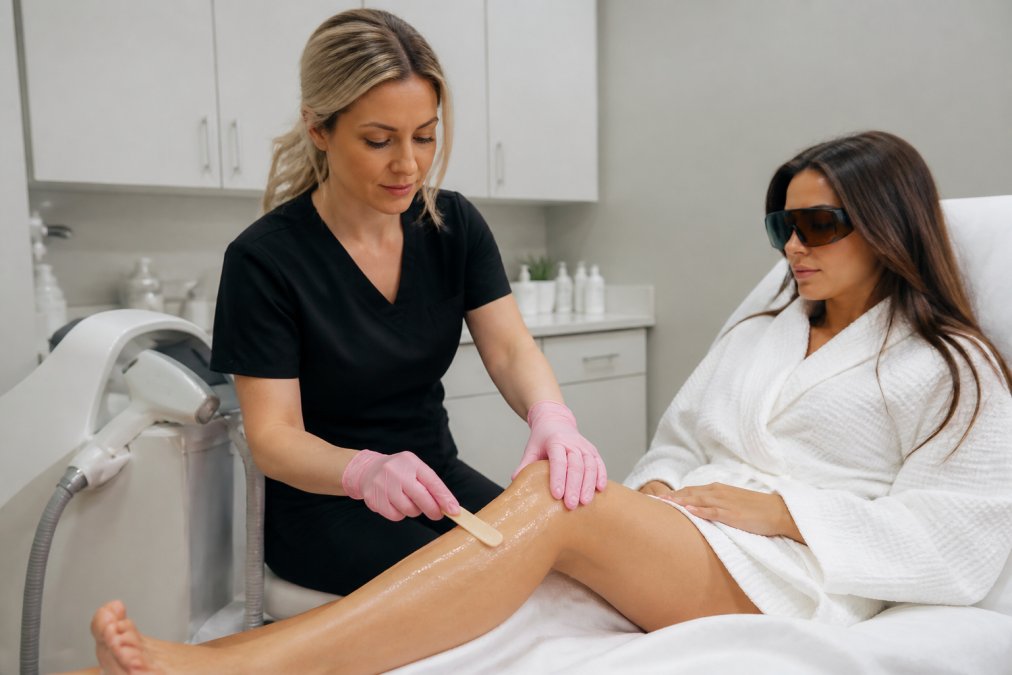
A typical laser hair removal session lasts between 15 and 60 minutes depending on the size of the area being treated. Small zones like the upper lip can be finished in minutes, while full legs require substantially more time. Most patients describe the sensation as a quick snapping or warming feeling on the skin.
Before the laser pulse begins, the treatment area is cleansed and often shaved to ensure the energy targets the follicle beneath the surface rather than being absorbed by surface hair. A cooling gel or the laser's built-in cooling tip protects the upper layers of skin from thermal damage. You should feel minimal discomfort, though pain management strategies such as topical numbing cream are available for sensitive areas.
Post-treatment redness and mild swelling are common and typically subside within a few hours. You can return to normal activities immediately, though sun exposure on treated skin should be avoided for a few days. A clinician will provide specific aftercare instructions tailored to skin sensitivity.
Conclusion
Laser hair removal is a gradual process that rewards patience and consistency. Plan for 6 to 8 laser hair sessions spaced according to your treatment area, and accept that maintenance visits may be needed down the road. The most reliable results come from working with a provider who evaluates your skin type, hair characteristics, and any underlying hormonal factors before starting.
Choosing a physician-led practice makes a meaningful difference in both safety and outcomes. At Medical Aesthetics and Lasers, every treatment plan is developed under medical supervision with modern laser technology and a focus on natural-looking results. Dr. Ayaz Khan and the team assess your suitability during a consultation, ensuring your expectations align with what laser technology can realistically achieve. Book your consultation today and take the first step toward smoother, longer-lasting results.
Frequently Asked Questions
Will 3 sessions of laser hair removal do anything?
Three sessions can reduce hair growth noticeably, but they are not enough to achieve the full results most people want. Laser treatment only affects hair follicles in the active anagen phase, and because hair grows in cycles, each session catches a different portion of hairs. You may see thinner, sparser hair after three sessions, but you will likely need a full course of 6 to 8 sessions to see significant, long-lasting reduction.
What happens if I stop laser hair removal after 4 sessions?
Stopping after four sessions means you have not completed the full course of treatment. The hair follicles that were in the resting or shedding phase during your sessions will not have been destroyed. You will likely see regrowth in those areas, though the hair may be finer and lighter than before. To achieve long-lasting results, it is important to complete the recommended number of sessions and follow the advised treatment intervals.
Why is my hair growing back 2 days after laser?
This is often called 'shedding.' In the days after a session, the treated hairs are pushed out of the follicle by the laser energy. The hair shaft remains in the follicle until the skin naturally sheds it, which can take 5 to 14 days. This is a sign the treatment is working, not that the hair is regrowing. If you see regrowth after a few weeks, it is likely from follicles that were not in the active growth phase during your session.
How far apart should laser hair removal sessions be?
The ideal spacing between sessions depends on the treatment area and your hair growth cycle. Typically, facial areas require sessions every 4 to 6 weeks, while body areas are spaced 6 to 8 weeks apart. This schedule allows you to treat hairs as they enter the active anagen phase. A provider will recommend a personalized treatment timeline based on hair type, skin tone, and the area being treated to maximize the effectiveness of each session.