 how-to
Chronic Tendon Pain: A Regenerative Medicine Guide
Table of Contents
- Understanding Chronic Tendon Pain and When Regenerative Medicine Applies
- How Regenerative Medicine Works for Tendon Repair
- PRP Injections for Tendon Pain: What to Expect
- Stem Cell and Advanced Cell-Based Treatment Options for Chronic Tendonitis
- Tendon Healing and Recovery: Post-Procedure Rehabilitation Protocols
- Tendon Strengthening Exercises and Long-Term Management
- Evaluating Regenerative Medicine: Efficacy, Risks, and When to Consider Treatment
- Your Next Steps: Consultation and Personalized Treatment Planning
- Frequently Asked Questions
Last Updated: October 5, 2026
Understanding Chronic Tendon Pain and When Regenerative Medicine Applies
Chronic tendon pain affects millions of adults, often limiting daily activities and quality of life.
What causes chronic tendinopathy
Chronic tendinopathy develops when tendons experience repetitive stress without adequate recovery. Over time, small tears accumulate. Inflammation sets in. The tendon weakens further.
Common causes include:
- Repetitive overuse (sports, occupational tasks)
- Age-related tendon degeneration
- Previous acute injuries that didn't heal completely
- Poor biomechanics or movement patterns
- Inadequate rest between activities
The problem isn't always the initial injury. It's what happens after. Many people develop chronic inflammation that persists long after the acute phase should have resolved.
Why traditional treatments may fall short
Standard approaches, rest, physical therapy, anti-inflammatory medications, work well for acute tendon injuries. But chronic tendinopathy is different. The tissue has already adapted to dysfunction. Inflammation has become chronic rather than protective.
Many patients find that:
- Rest alone doesn't restore tissue quality
- Medications mask pain without addressing underlying degeneration
- Physical therapy helps manage symptoms but doesn't reverse tissue damage
- Surgery carries risks and recovery time without guaranteeing resolution
This is the gap where regenerative medicine enters. Rather than simply reducing inflammation or removing damaged tissue, regenerative approaches stimulate your body's own repair mechanisms.
How Regenerative Medicine Works for Tendon Repair
Chronic tendon pain regenerative medicine leverages your body's natural healing capacity to address underlying tissue damage.
The role of biological components and growth factors
Your body produces growth factors, signaling molecules that direct cellular activity.
With chronic tendinopathy, this signaling becomes impaired. Growth factor production drops. Cellular repair slows.
Key biological players include:
- Growth factors: Direct cellular behavior and tissue repair
- Cytokines: Regulate inflammation and immune response
- Extracellular matrix components: Provide structural scaffolding for new tissue formation
- Autologous cells: Patient-derived cells that differentiate into specialized tissue types
These components work together. They reduce chronic inflammation. They stimulate collagen synthesis. They promote tissue remodeling toward normal function.
Tissue regeneration and collagen synthesis
Tendons are primarily composed of collagen, a protein that provides tensile strength. Chronic tendinopathy disrupts normal collagen organization. Fibers become misaligned.
Regenerative approaches stimulate fibroblasts, the cells responsible for producing new collagen. When activated, fibroblasts increase collagen synthesis. New fibers align properly.
This process takes time. Tissue remodeling unfolds over weeks and months.
PRP Injections for Tendon Pain: What to Expect
Platelet-rich plasma (PRP) therapy concentrates platelets from your own blood. Platelets contain growth factors and signaling molecules that stimulate healing.
How platelet-rich plasma therapy targets chronic inflammation
PRP works through multiple mechanisms. Platelets release growth factors that attract healing cells to the injury site. These factors reduce chronic inflammation by modulating immune response.
The treatment is minimally invasive. A small blood sample is drawn. A centrifuge concentrates the platelets.
Benefits often include:
- Reduced pain and inflammation
- Improved tissue quality on imaging
- Better functional capacity over time
- Lower risk compared to surgery
The PRP procedure and recovery timeline
The PRP injection itself takes 15-20 minutes. Discomfort is minimal because local anesthetic is used. Most patients return to light activity the same day.
Recovery follows a predictable pattern:
- Days 1-3: Mild soreness at injection site; rest is important
- Week 1-2: Gradual return to gentle movement; avoid heavy loading
- Week 3-6: Progressive activity as tolerated; inflammation typically decreases
- Week 6-12: Continued improvement; tissue remodeling accelerates
- 3-6 months: Maximum benefit realized; many patients report significant improvement
Multiple injections may be recommended. Some protocols use 2-3 treatments spaced 4-6 weeks apart. This staged approach allows tissue to respond and rebuild progressively.
Stem Cell and Advanced Cell-Based Treatment Options for Chronic Tendonitis
For more advanced cases, cell-based therapies offer greater regenerative potential. These treatments use patient-derived cells to directly stimulate tissue repair.
Bone marrow aspirate concentrate and autologous cell therapies
Bone marrow contains mesenchymal stem cells, undifferentiated cells capable of becoming various tissue types.
These autologous cells:
- Differentiate into tendon-producing fibroblasts
- Secrete growth factors and anti-inflammatory molecules
- Promote collagen synthesis and tissue organization
- Reduce chronic inflammation through immunomodulatory effects
BMAC is minimally invasive. A needle is inserted into bone (typically the iliac crest near the hip). A small volume of marrow is withdrawn.
Exosome-based treatments and extracellular matrix support
Exosomes are tiny vesicles released by cells. They carry growth factors, proteins, and genetic material that communicate healing signals. Exosome-based treatments represent the frontier of regenerative medicine for tendon repair.
Exosomes derived from mesenchymal stem cells offer:
- Potent anti-inflammatory effects
- Direct stimulation of collagen synthesis
- Enhanced tissue remodeling
- Reduced chronic inflammation
Some protocols combine exosomes with extracellular matrix scaffolds, biological materials that provide structural support and guide tissue regeneration. This combination approach addresses both the cellular and structural aspects of tendon healing.
Tendon Healing and Recovery: Post-Procedure Rehabilitation Protocols
Regenerative treatment success depends heavily on what happens after the injection. Proper rehabilitation guides tissue remodeling and prevents re-injury.
Immediate aftercare and activity modification
The first two weeks are critical. Rest allows the injection site to stabilize. Inflammation, which is part of the healing response, must be allowed to progress naturally.
Immediate aftercare includes:
- Ice application (15 minutes, 3-4 times daily) for the first 48 hours
- Elevation of the affected limb when possible
- Avoidance of heavy loading or high-impact activity
- Gentle range-of-motion exercises to prevent stiffness
- Anti-inflammatory medications only as directed by your physician
Activity modification is essential. Patients should avoid:
- Running, jumping, or high-impact sports
- Heavy lifting or resistance training
- Repetitive gripping or throwing motions
- Prolonged standing or walking
Light walking and gentle stretching are typically tolerated. Your physician will provide specific guidelines based on the tendon treated and the regenerative approach used.
Progressive loading and tissue remodeling phases
After the initial rest period, progressive loading stimulates tissue remodeling. Tendons adapt to stress by becoming stronger. But progression must be gradual.
Typical phases include:
| Phase | Timeline | Activity Level | Goal |
|---|---|---|---|
| Rest & Protection | Weeks 1-2 | Minimal activity, gentle ROM | Allow inflammation, prevent re-injury |
| Early Mobilization | Weeks 3-6 | Light stretching, isometric exercises | Restore mobility, begin cellular repair |
| Progressive Loading | Weeks 6-12 | Gradual resistance, functional movements | Stimulate collagen synthesis, tissue strengthening |
| Return to Function | Weeks 12+ | Sport-specific or occupational activities | Full functional recovery |
Your physical therapist will guide progression. The key principle: load the tissue enough to stimulate adaptation, but not so much that re-injury occurs.
Tendon Strengthening Exercises and Long-Term Management
Long-term success requires ongoing attention. Strengthening exercises prevent recurrence and optimize tissue quality.
Early-phase isometric and low-load exercises
Isometric exercises create tension without movement. They build strength safely during early recovery.
Examples include:
- Wrist flexor isometric: Grip a soft ball firmly for 5-10 seconds; rest; repeat 10 times
- Achilles isometric: Stand facing a wall; press calf muscle against wall for 5-10 seconds; repeat 10 times
- Shoulder external rotation isometric: Hold arm at 90 degrees; press against resistance without moving; hold 5-10 seconds; repeat 10 times
Perform isometric exercises 2-3 times daily. Pain should not increase during or after exercise. If it does, reduce intensity or frequency.
Progressive resistance and functional movement patterns
As healing progresses, introduce light resistance. Bands, light weights, or body weight can provide load.
Progressive exercises might include:
- Eccentric loading (lengthening under tension)
- Controlled resistance band work
- Light dumbbell exercises
- Sport-specific or occupational movements adapted to current capacity
The goal is to restore normal function. A tennis player returns to serving. A laborer returns to their job. Progression should feel gradual and manageable.
Evaluating Regenerative Medicine: Efficacy, Risks, and When to Consider Treatment
Not every patient is a candidate for regenerative treatment. Honest evaluation requires understanding both potential benefits and limitations.
Clinical outcomes and what research shows
Many patients report meaningful improvement with regenerative treatments. Pain may decrease, and function may improve. Imaging may show better tissue organization.
Outcomes vary based on:
- Severity and duration of tendinopathy
- Type of regenerative treatment used
- Patient age and overall health
- Adherence to rehabilitation protocols
- Underlying biomechanical factors
Some patients experience significant improvement within 3-6 months. Others see gradual progress over a longer timeline. A small percentage experience minimal benefit.
Realistic expectations matter. Regenerative medicine stimulates healing, it doesn't guarantee complete restoration. A severely damaged tendon may improve substantially but never return to pre-injury capacity.
Contraindications, risks, and honest expectations
Regenerative treatments are generally safe when performed by qualified physicians. But they're not appropriate for everyone.
Relative contraindications include:
- Active infection at the injection site
- Severe systemic illness or immunosuppression
- Certain medications that impair healing
- Pregnancy (for some treatments)
- Unrealistic expectations about outcomes
Potential risks, though uncommon, include:
- Temporary increase in pain or swelling
- Infection (rare with proper sterile technique)
- Nerve or blood vessel injury (very rare with ultrasound guidance)
- Allergic reaction to local anesthetic
- Incomplete healing or recurrence
These risks are significantly lower than surgical alternatives. But they exist.
Your Next Steps: Consultation and Personalized Treatment Planning
The right treatment depends on your specific situation. A physician-led evaluation guides the decision.
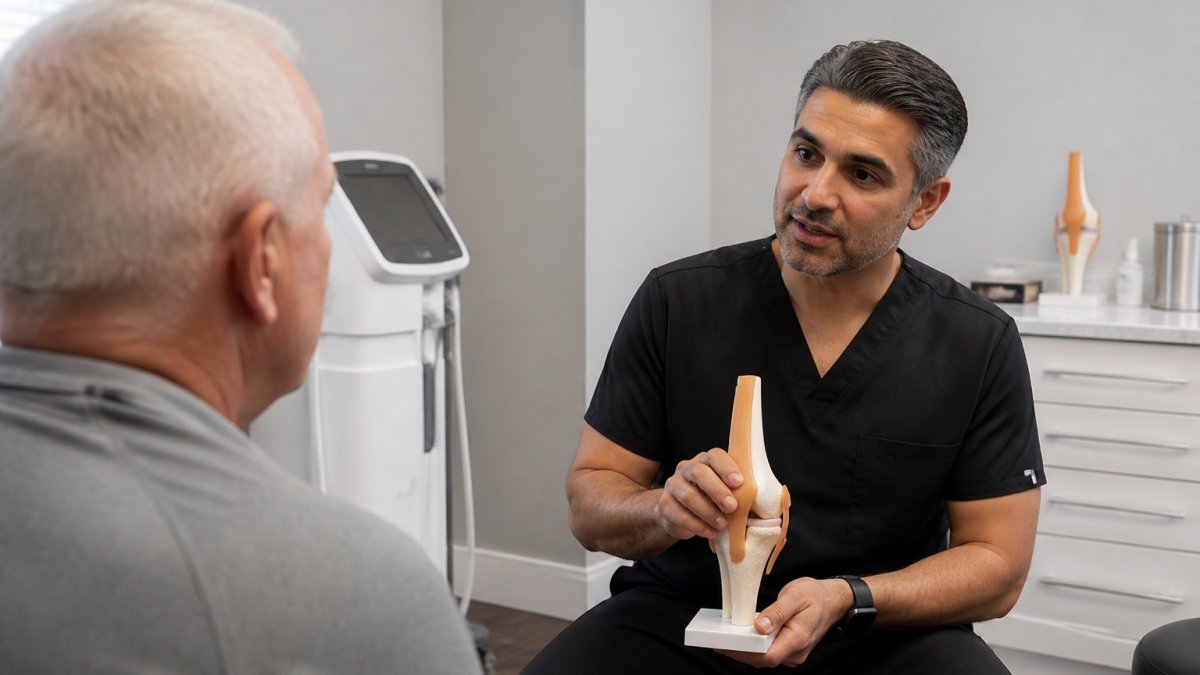
Questions to ask your physician before treatment
Before committing to regenerative treatment, clarify these points with your doctor:
- What type of regenerative treatment do you recommend, and why?
- What specific outcomes should I realistically expect?
- How many treatments will I need, and how far apart are they scheduled?
- What is the recovery timeline, and when can I return to normal activities?
- What are the potential risks and complications specific to my situation?
- How will we monitor progress? What imaging or testing will track healing?
- If this treatment doesn't work, what are my next options?
- Do you have experience treating my specific tendon problem?
Clear answers help you make an informed decision. If your physician can't articulate realistic expectations or seems dismissive of your concerns, seek a second opinion.
Insurance, financing, and transparency
Regenerative treatments are often not covered by insurance. Costs vary based on the type of treatment and the facility. Medical Aesthetics and Lasers offers flexible treatment financing options.
Before treatment, clarify:
- The exact cost of the recommended treatment
- What's included (initial consultation, imaging, injections, follow-up visits)
- Whether additional treatments are anticipated and their costs
- What financing options are available
- What happens if you need additional treatments beyond the initial plan
Transparency about costs prevents surprises. A reputable clinic explains pricing clearly and avoids pressure tactics.
Chronic tendon pain doesn't have to be permanent. Regenerative medicine offers a physician-led pathway to address the underlying tissue damage, not just manage symptoms.
Frequently Asked Questions
What are the main treatment options for chronic tendonitis besides surgery?
Regenerative medicine offers several minimally invasive approaches: PRP therapy uses your own platelet-rich plasma to reduce chronic inflammation and stimulate collagen synthesis; stem cell and cell-based therapies harness autologous cells or bone marrow aspirate concentrate (BMAC) to promote tissue regeneration; exosome treatments deliver growth factors and biological components to damaged tendons. Each option targets tendon degeneration differently. A physician evaluation determines which approach best suits your specific tendinopathy and medical history.
How long does tendon healing and recovery take after a regenerative medicine procedure?
Recovery timelines vary by treatment type and severity of tendon damage. PRP injections typically show initial improvement within 2-4 weeks, with progressive gains over 3-6 months as collagen synthesis and tissue remodeling occur. Stem cell therapies may require 6-12 weeks for noticeable clinical outcomes. Post-procedure rehabilitation protocols are critical: early phases involve activity modification and isometric exercises, progressing to resistance training as healing advances. Full functional recovery often takes 3-6 months of consistent rehabilitation.
What makes regenerative medicine different from traditional treatments for chronic tendon pain?
Traditional approaches like rest, physical therapy, or corticosteroid injections address symptoms but don't directly repair tissue damage. Regenerative medicine uses biological components, growth factors, autologous cells, and extracellular matrix, to actively stimulate tissue regeneration and reduce chronic inflammation at the cellular level. This minimally invasive approach targets the underlying tendon degeneration rather than just masking pain, potentially offering longer-lasting relief and restored function without surgery.
Are there risks or contraindications I should know about before pursuing regenerative medicine for tendon pain?
Regenerative treatments are generally well-tolerated, but certain conditions may contraindicate treatment: active infections at the injection site, severe systemic illness, or specific blood disorders. Temporary swelling, bruising, or mild discomfort at the injection site are common. Rare complications include allergic reactions or infection. Pregnancy, uncontrolled diabetes, or certain medications may affect candidacy. Honest discussion with a qualified physician about your medical history, current medications, and realistic expectations is essential before proceeding.